Thursday, March 14, 2013

Culture Shock 03.14.13: In search of 'In Search of...'


"This series presents information based in part on theory and conjecture. The producer's purpose is to suggest some possible explanations, but not necessarily the only ones to the mysteries we will examine."

From 1977 to 1982, that was your weekly warning to take the next half hour of television with a heaping spoonful of salt. It was the disclaimer that introduced each episode of "In Search of... ."

Hosted by Leonard Nimoy, "In Search of..." ran for six 24-episode seasons, and by the time it was done, it had become, in a bizarre way, a record of America's fears and obsessions in the years following Vietnam and Watergate. Before "The X-Files" spelled it out for us, here was a show that dealt in alleged conspiracies and cover-ups, while in search of a truth that was certainly "out there."

Now, for the first time, "In Search of..." is available on home video: a mammoth 21-disc DVD box set containing all six seasons of the original series, all eight episodes of the 2002 Sci-Fi Channel revival hosted by Mitch Pileggi of "The X-Files" and the two pilot episodes hosted by Rod Serling.

Before "Ghost Adventures" and "Ghost Hunters," "Ancient Aliens" and "Finding Bigfoot," even before Art Bell first took to the overnight airwaves with "Coast to Coast A.M.," "In Search of..." brought ghosts, UFOs, the Loch Ness Monster and other paranormal phenomena into homes across America. It caught the zeitgeist of the era, when interest in strange phenomena and the boundaries of science, pseudoscience and fantasy seemed to reach a peak, spurred on by the publication in 1968 of Erich von Däniken's best-selling hodgepodge of mythology and UFO lore, "Chariots of the Gods."

Casting Nimoy as host was a stroke of genius. Then as now associated with his role as the sober-minded and logical Mr. Spock, who better was there to get viewers to take seriously notions like "animal ESP" and the lost civilization of Atlantis?

Almost as important was the show's music, by disco producers Laurin Rinder and W. Michael Lewis, which gave the proceedings an appropriately creepy atmosphere. (That's a soundtrack, issued on vinyl in 1977, begging to be re-released.)

If you believe in the paranormal, this DVD set is like Christmas. Yet even if you are a skeptic — as I am — it is a fascinating, if frustrating, look at persistent myths in earlier stages of their evolution. While Mr. Nimoy's fashions are dated, most of the subjects the show investigates are still fodder for basic cable. They still haven't found bigfoot.

But some "In Search of..." topics are one with their time. If you were born after 1980, you probably don't remember when Americans were terrified of killer bees making their way to the U.S. from South America. Nor do you remember when looming climate change wasn't global warming but "The Coming Ice Age." "In Search of..." tackles both, and makes them seem truly terrifying.

Then there's the Bermuda Triangle. Almost no one talks about it anymore, but the area defined by Miami, the island of Bermuda and San Juan, Puerto Rico, was once known for strange goings on and vanished boats and aircraft. Now, with hindsight and better record keeping, we know this heavily traveled area of the Atlantic doesn't even have an unusually high number of disappearances.

Yet unlike most of the paranormal and conspiracy-theory shows now on the air, "In Search of..." can still surprise you. An episode about the disappearance of Amelia Earhart flirts with the outlandish before settling on a more prosaic explanation. And an episode about the Trojan War is actually too skeptical. The latest archaeological evidence indicates the conflict remembered in Homer's epic poem probably did happen, in some form.

In retrospect, "In Search of..." does give us important insights, just not the ones its producers imagined. It's a slice of life from America at its most paranoid and neurotic.

Thursday, March 07, 2013

Culture Shock 03.07.13: Obama's geek cred disappears at warp speed


Election Day has come and gone. The inauguration has passed. Too late, the truth about President Barack Obama has revealed itself.

The president is a fake geek.

Ever since his arms akimbo photo op with the iconic statue of Superman in Metropolis, Ill., the president's adopted home state, Obama has enjoyed an image as the most geek-friendly chief executive in the nation's history. He invited comparisons to the logical Mr. Spock, and his White House responded gamely to a petition asking the administration to build a Death Star. (The White House said no, for once deciding a program was just too expensive.)

The geek community returned the love. Obama appeared in Image Comics' "Savage Dragon" and in a heavily promoted issue of Marvel Comics' "The Amazing Spider-Man."

But with one slip of the tongue, it all vanished faster than Marty McFly's siblings in a snapshot.

During a press conference last week, President Obama said he couldn't force Republican leaders to come to an agreement with him by performing a "Jedi mind meld" on them.

At the speed of Twitter (roughly 0.999 the speed of light), word of the president's fall to the Dark Side spread. He had confused "Star Trek" and its "Vulcan mind meld" with "Star Wars" and its "Jedi mind trick."

What followed was a great disturbance in the Force, as if millions of voices suddenly cried out in terror and wouldn't shut up about it. Within minutes, #ObamaSciFiQuotes was trending: "Beam me up, Chewy," "Set lightsabers to stun," and, combining Obama's faux pas with the news of the day, "These are not the drones you are looking for." Talk about an un-Forced error.

Some fans claim Obama's gaffe wasn't really a gaffe, because in some "Star Wars" spinoff novels, the Jedi are shown performing a "Force meld." I'm not buying this explanation for a second. First, I doubt the president reads "Star Wars" spinoff novels. Second, the novels don't count, and Boba Fett died in the sarlacc pit.

Saying "Jedi mind meld" is like your mom referring to that show you used to watch in reruns when you were a kid as "Star Track." It's a signpost that tells you your next stop is the Clueless Zone, warp factor 9.

So, the president isn't as much of a geek as he let us believe. Perhaps his handlers encouraged the geeky facade to help his image among young people. President Obama isn't the first president to tell a core constituency what it wanted to hear, and his online image certainly benefited from his seeming geekiness.

Yet the more important takeaway is this confirms what has appeared to be true for the past decade: Geeky is the new cool. It's worth faking. Once geeks pretended not to be geeks, but now it's sometimes in the interest of non-geeks to pretend to be geeks.

The idea of fake geeks smashed headlong into gender politics last year when a debate raged online about "fake geek girls." These supposedly are attractive women who pretend to be geeks for nefarious purposes. By early this year, the discussion had made it to mainstream websites like Slate and The Atlantic. A consensus formed that fake geek girls exist only in the insecure minds of male geeks who feel threatened by attractive, geeky women intruding in their He-Man Woman Haters Club.

I've met a lot of attractive female geeks, so I know they're real. But the feminist response about insecure males reeks of its own kind of sexist overgeneralization. There are fake geeks — "poseurs" is a better term — of both sexes. How do I know? Because I've met them, too.

Male or female, don't tell me you're an anime geek if you don't know who Leiji Matsumoto is.

Thursday, February 21, 2013

Culture Shock 02.21.13: A penny ain't worth what it used to be

Killing Lincoln.

The film "Pennies from Heaven" starring Steve Martin, Bernadette Peters and Jessica Harper opened in 1981.

Since then, the titular penny has lost more than one-third of its value, according to the inflation calculator at www.usinflationcalculator.com. Yet the movie is set in the 1930s. So, take the TARDIS farther back, to the dark days of the Great Depression, and a penny from today suddenly has the purchasing power of 14 cents.

It's like when baby Kal-El journeys from Krypton to Earth, gets super powers and becomes Superman. In the past, the penny becomes the Superpenny, able to buy the stuff of 14 ordinary pennies.

But here in 2013, the penny is just the lowly penny. People drop them on the sidewalk and can't be bothered even to bend over and pick them up. A penny just isn't worth that much time and effort, and besides, my back hurts. From a monetary point of view, the penny is now a bigger wimp than Clark Kent ever was.

That's why there is a movement afoot, once again, to do in the penny once and for all.

Some groups like Citizens to Retire the Penny have campaigned to eliminate the penny from circulation for years, and President Barack Obama recently added his voice to those calling for change in our change. But so far they have been no match against the feared zinc lobby, or, as I like to call it, Big Zinc.

Yogi Berra once quipped, "A nickel ain't worth a dime anymore." That isn't just a truism; it's economics. About 100 years ago, a penny was worth roughly a quarter, adjusted for inflation. But after a century of Federal Reserve-backed monetary expansion, a penny ain't worth a quarter anymore. It ain't even worth a penny.

Other governments have already killed their pennies. Canada ended production of its 1-cent coin earlier this month. As governments inflate their currencies, lower-denomination coins cease to be worth minting, or even face value. It costs the U.S. government 2.41 cents for every penny it mints.

By that standard, the penny is worth more dead than alive. You're better off melting them down and selling the zinc back to the U.S. government to make more pennies. If "Seinfeld" were still on the air, this would be a great get-rich-quick scheme for Kramer and Newman.

The only economic case to be made for the penny is without it businesses would round up their prices and we'd all end up paying more. But that argument is probably overstated, and as the penny continues to lose value, less and less persuasive. You might as well complain that businesses have to round up to the nearest cent because there are no half-cent coins. (Yes, there used to be half-cent coins in the U.S., from 1793 to 1857.)

Add to all that the hidden cost of keeping up with pennies, counting them out, storing them, sorting them, driving them to the nearest Coinstar machine to get rid of them and the time spent wrapping them to take them to the bank, and pennies are surprisingly expensive for something so worthless.

The penny's only remaining value is cultural.

We name daughters Penny. We don't name them Nickel or Dime. It's "a penny for your thoughts," not a quarter because, face it, no one cares that much about what's on anyone's mind. And if you're really poor, you "don't have two pennies to rub together" because not even really poor people will bend over to pick them up.

The only known form of communism to work are the "take a penny, leave a penny" trays you find in convenience stores and restaurants. When they are gone, it'll be the worst day for communism since the fall of the Berlin Wall. It gives new meaning to "red cent."

Thursday, February 14, 2013

Culture Shock 02.14.13: Anti-comics crusader seduced himself

Fredric Wertham is shocked by what he sees.
Since his death in 1981, Fredric Wertham's reputation has taken a significant hit.

In the 1950s, Wertham, a psychiatrist, was a popular author and public figure, quoted in the media and giving testimony before Congress. His 1954 book, "Seduction of the Innocent," was the intellectual ammunition in the moral panic of the day — the crusade against juvenile delinquency. And Wertham placed the blame squarely on comic books.

Today his reputation is mostly that of a ridiculous crank, a puritanical moralist who tried to blame Batman and Robin for male homosexuality, Wonder Woman for lesbianism (and bondage and S&M), and crime and horror comics for every form of juvenile misbehavior imaginable.

As it happens, neither view of Wertham is strictly true. The truth, it seems, is far simpler.

Fredric Wertham was a fraud.

Carol Tilley, a librarian and professor at the University of Illinois at Urbana-Champaign, went through Wertham's papers, which he left to the Library of Congress. In the papers devoted to "Seduction of the Innocent," she found evidence of a very different seduction, evidence she details in an article published in Information and Culture: A Journal of History.

"Lots of people have suspected for years that Wertham fudged his so-called clinical evidence in arguing against comics, but there's been no proof," Tilley said in a university press release this week. "My research is the first definitive indication that he misrepresented and altered children's own words about comics."

"Fudged" is a charitable word. Tilley found Wertham exaggerated claims, omitted critical information and altered his subjects' statements. In one case, that of a 13-year-old boy who sexually abused another boy, Wertham overstates the 13-year-old's interest in Batman and, far worse, leaves out that the 13-year-old was himself sexually abused by another boy. One might think history of sexual abuse would be more relevant than history of reading Detective Comics. Wertham thought otherwise.

The charitable reading of that is Wertham was himself seduced, possibly by the minor celebrity he attained as an anti-comics crusader, but most likely by his grand theory that one could explain juvenile delinquency just by pointing an accusing finger at that crudest and most commercial of pop art forms of the day, the lowly comic book. Nothing seduces an Ivory Tower-dweller quite like a grand theory.

Before Wertham, the moral panic he helped foment and the comics industry's craven self-censorship under the Comics Code Authority, comics were a free for all. Unlike broadcasters, comics publishers weren't regulated by the FCC, and unlike the movie studios they weren't beholden to the Hays Office. After Wertham, the vice tightened and sales plummeted. EC Comics, upstart publisher of still-influential horror titles like Vault of Horror and Tales from the Crypt, got out of comics entirely. The Comics Code, crafted by its more-established rivals, seemed written to put EC out of business.

Wertham lied. EC died.

Science is supposed to be objective. Unfortunately, science is full of scientists, who are merely human and subject to bias, preconception, hubris and, occasionally, even corruption. Another kind of seduction is the temptation to bend facts, omit facts and, yes, "fudge" facts in the service of a supposedly noble cause. And what could be more noble than saving children?

So one moral panic follows another, some promoted by left-leaning intellectuals like Wertham, some by social conservatives, and some by oddball alliances of the two. The targets change. One day it's comics, the next TV, the next rock music, the next Dungeons & Dragons, the next violent movies and now video games. The "science," however, is always suspect.

Wertham's seduction should prompt us to think twice when faced with his successors.

Thursday, February 07, 2013

Culture Shock 02.07.13: Alas, poor Richard III, do we know him?


Richard III is finally getting his second act.

The last English king to die on the battlefield, Richard was disinterred last year from his resting place beneath a car park in Leicester, England. (Still no sign of Jimmy Hoffa.) This week, scientists revealed the results of a DNA comparison and proclaimed the 527-year-old remains those of of the last Plantagenet king, killed on Bosworth Field, some 20 miles away, on Aug. 22, 1485.

If his bones could talk, they'd shout, "A hearse! A hearse! My kingdom for a hearse!"

Even his enemies admit his courage. He died fighting and he died badly, sustaining multiple fatal wounds to the skull, along with postmortem injuries for good measure. He played the game of thrones and lost.

The archaeologists who found him haven't said if there was any good interred with his bones, not that one would expect it given his reputation as the most villainous of English monarchs, a Machiavellian schemer who likely — but it is disputed — had his nephews murdered to secure his throne, and who was cursed with a twisted, deformed body matching his dark, twisted soul.

Turns out Richard III did indeed have a twisted spine, likely from scoliosis.

The results of CSI: Leicester's investigation may yet embolden revisionists and Yorkist dead-enders bent on rehabilitating the king, but history is written by the victors, and plays are written by the victors' bards. In this case, the Bard of Avon, William Shakespeare.

Richard's death ended the War of the Roses, the House of York's dynasty and the entire Medieval period. It ushered in modernity and the Tudors, beginning with the coronation of Henry Tudor as Henry VII. Henry VII begat Henry VIII, who begat Elizabeth I, who reigned over the age of Shakespeare, as those of you who have seen "Shakespeare in Love" no doubt recall.

Judi Dench won an Oscar for her portrayal of Elizabeth I in that film, but I'm partial to Miranda Richardson's daffy and bloodthirsty portrayal of the queen in "Blackadder II." Richardson's capricious Elizabeth is always threatening to chop off people's heads, which is a good summation of what happened to those who offended monarchs back in the day.

So, when it comes to Shakespeare's portrayal of the House of Tudor's old foe, he doesn't spare the cheap seats. Building on other contemporary portrayals of Richard III, Shakespeare's version is a hunchback with a limp and a withered arm, all outward symbols of his villainy. (The recovered skeleton shows no sign of a withered arm.) It is Shakespeare's Richard that has, through intervening centuries, entered the public consciousness and devolved into caricature. (See, for example, the Richard III ward in Monty Python's "Royal Hospital for Overacting" sketch.)

History is a moving target. Even the exact location of the Battle of Bosworth Field wasn't settled until three years ago, when archaeologists put the location a mile southwest of what had been taken as fact for 500 years. Bosworth Field tourists have been getting lost since Columbus got lost.

Shakespeare may have been a Tudor propagandist, but Richard III's remains on their own won't improve the king's image. Mostly, they confirm what history and drama have said, from the hunchback to the brutality of his death. His shallow, forgotten grave hints at just how disliked he was — at least by the Tudors and Lancasters.

Whether he really did in his nephews or whether he was a good and fair administrator, when not vying with his rivals, will remain matters of debate. No amount of forensic detective work, apart from finding the nephews walled up in the Tower of London, will change that.

Without a doubt, Richard III was a nasty piece of work, but so were the Tudors and Lancasters.

For what it's worth, Vlad the Impaler has his revisionist admirers, too.

Thursday, January 31, 2013

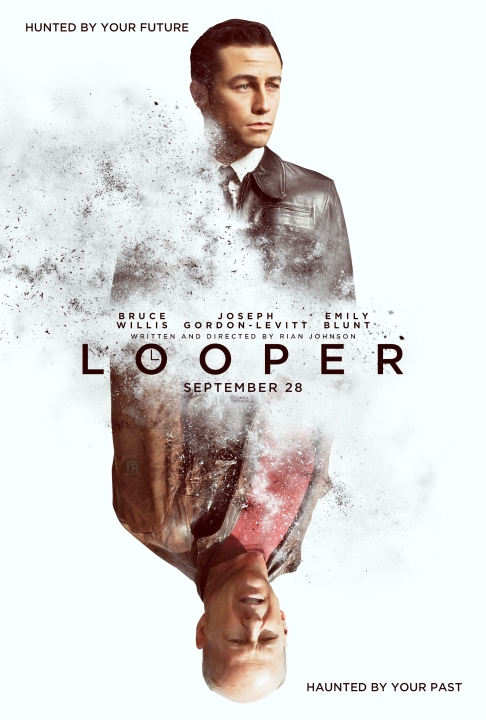
Culture Shock 01.31.13: 'Looper' is cinematic sleight of hand


Trying to wrap your head around time travel can give you a headache.

If you're Marty McFly, you have Doc Brown to explain it to you. If you're Bruce Willis' character in "Looper," you down handfuls of aspirin because time travel literally gives you a headache.

One must forgive any time travel movie its occasional plot holes or lapses in logic. The thing about time travel, by its very nature, is it creates plot holes. In the language of the genre, they're called "temporal anomalies." If you've seen any "Star Trek" after the original series, you've likely heard of them. But good filmmakers are clever enough to disguise them or make them part of the story or at least divert your attention from them.

With "Looper," writer/director Rian Johnson ("Brick") tries a little of all three and delivers one of the smartest, most entertaining science-fiction films in years — and one of the best films of the past year. Add another to the list of Oscar snubs.

"Looper" (Blu-ray and DVD) is set in the near future, around 2044. A few decades later, in 2074, our narrator tells us, time travel will be invented — and immediately outlawed. This works about as well outlawing liquor in the 1920s or marijuana today. When the mob wants to off someone, it sends them back in time to the 2040s, where paid assassins await the easy, untraceable kill.

The ubiquitous Joseph Gordon-Levitt ("The Dark Knight Rises") plays Joe, one of the mob's hired guns in 2044. These hired guns are called "loopers" because when the mob of the future decides to cancel their contracts, it sends the loopers' older counterparts back in time to be killed by their younger selves, completing the loop and leaving no loose ends. In return, the younger version earns a windfall retirement package.

That may seem like a bad deal, but as Joe says, the job doesn't exactly attract forward-thinking people. It attracts reckless young punks who doubt they'll even live another 30 years.

So, Joe lives the good life, while he can, bumping off people from the future and stockpiling silver until he suddenly finds his future self (Willis) on the other end of the gun.

And Old Joe does the unthinkable. He escapes.

Old Joe is trying to change the future, Young Joe is trying to kill Old Joe, and the mob — led by a charmingly droll Jeff Daniels ("The Newsroom") — is trying to eliminate both Joes. But that's not the half of it.

The bigger mystery comes into play when Young Joe, on the run, hides out with a young mother (Emily Blunt) and her brilliant but unsettling son, Cid (Pierce Gagnon).

Johnson pulls a few fast ones on us. First, he violates H.G. Wells' rule of science fiction: Change one thing and see what follows from it. Johnson changes two things. He introduces time travel, but he also posits humans who develop low-level telekinetic powers — an idea worth its own movie. It seems like a throwaway plot point at first, but it ends up being crucial.

Second, he covers up his biggest time-travel plot hole with a cinematic sleight of hand. If Old Joe escapes in 2044, how does Young Joe live out his life normally so he can he sent back in 2074? Johnson dodges the question by shifting the perspective. It goes from Young Joe to Old Joe remembering his days as Young Joe. It's a bit of a cheat, but all time travel stories are, and Johnson carries off his bait-and-switch so deftly you'd have to be a real curmudgeon to complain.

On the surface, "Looper" is a time-travel movie, but it's really about how we view the passage of time. Are we in it only for the short run? Can we sacrifice in the now for the sake of the future?

These are the sort of questions we ask ourselves all the time. We just don't have the future literally staring us in the face.

Thursday, January 24, 2013

Culture Shock: 01.24.13: 'Dredd' lays down the letter of the law


In the near future, Mega-City One stretches across the Eastern Seaboard. Within its concrete and steel canyons, hundreds of millions of people live, walled off from the war-ravaged wastelands to the west. Outside is desolation. Inside is a vast, crowded, chaotic city-state beset by warring gangs.

The only thing keeping law and order are the judges. Each one is judge, jury and, if the punishment fits the crime, executioner. They are the law. And the most feared judge of all is Judge Dredd.

"Dredd" is the second attempt to bring the long-running British comic-book character to the screen. The first, 1995's "Judge Dredd" starring Sylvester Stallone, set new standards for bad decisions and bad acting. The new "Dredd" (Blu-ray and DVD) is at least respectful of its source material, but it never embraces the comic's black humor and subversive critique of authority. It has less ambitious goals in mind.

Take "The Rookie" starring Clint Eastwood and Charlie Sheen, cross it with the first "Die Hard," set it in the future, and you pretty much have "Dredd."

After taking down a van full of gang members high on a new drug called "slo-mo," which makes time appear to move in slow motion, Dredd (Karl Urban of the rebooted "Star Trek") is assigned to give a final pass/fail field test to a trainee judge, Anderson, played by Olivia Thirlby of "Juno."

Anderson is a borderline case who shouldn't even have made it to the field-test stage, but she has a quality that makes giving her a final shot worthwhile: She is a mutant with psychic abilities, the result of her having grown up near the wall separating Mega-City One from the radioactive wastes.

But because this is a movie, it's not going to be a typical training exercise.

Investigating a triple-homicide call leads to Dredd and Anderson becoming trapped in Peach Trees, a 200-story skyscraper slum ruled by Ma-Ma (Lena Headey of "Game of Thrones"), a former prostitute who has built a criminal empire, including control of Mega-City One's slo-mo trade.

With limited ammunition and no backup, Dredd and Anderson must blast their way up and out of Ma-Ma's locked-down fortress, with her army on their heels and hundreds of civilians in the crossfire.

Headey is very good in her stereotypically male role as the ruthless, disfigured villain, and Thirlby gets the movie's best set piece when she goes inside the mind of Ma-Ma's top lieutenant. But most of the credit goes to Urban, who stays true to his character by never removing his helmet, even though it means he can act only with his chin. Urban's enigmatic Dredd, keeping his thoughts and expressions to himself, is a marked improvement on Stallone's screaming buffoon.

Director Pete Travis and his team, with a relatively modest budget, deliver a convincing post-apocalyptic setting and a few first-rate action scenes. In the end, "Dredd" is a perfectly competent and enjoyable action film.

The only problem is it could have been much more, and at no extra cost.

Since its inception in 1977, the "Judge Dredd" comic, appearing in the British magazine 2000 A.D., has been filled with political and social satire. It has attracted some of the British comics industry's top talent, and it helped inspire the politically aware comic books that took America by storm in the 1980s, from Alan Moore and Dave Gibbons' "Watchmen" and Howard Chaykin's "American Flagg" to Mike Baron and Steve Rude's "Nexus" and Frank Miller's "The Dark Knight Returns." But you'd never get that impression from the movie "Dredd," which plays the absurd, madcap universe Dredd inhabits almost totally straight.

"Judge Dredd" co-creator Carlos Ezquerra says that when he created Dredd's costume, with its hints of fascist iconography, he intended it to be futuristic, but now some police actually dress the same way.

So, maybe "Dredd" the movie doesn't bother with satire because it's beside the point?

Thursday, January 17, 2013

Culture Shock 01.17.13: 'Cosmopolis' is a ride that goes nowhere


In "Cosmopolis," Robert Pattinson, fresh off portraying bland vampire Edward Cullen in the "Twilight" movies, plays bland corporate CEO Eric Packer.

Packer has made a gazillion dollars doing something — what, exactly, I'm not sure — and now heads a company run by T-shirted computer geniuses and senior executives who double as philosophers.

I suspect Packer, a man bored by everything, is supposed to be bland. But it's difficult to say where Packer's characterization stops and Pattinson's own lack of screen presence starts. Plotwise, the entire movie involves Packer riding in a stretch limo from one side of Manhattan to the other to get a haircut. Seriously, that's the plot, but it is complicated by a presidential visit that has traffic backed up all across town, vast throngs of protesters clogging the street in opposition to capitalism or globalization or the bogeyman du jour, and a "credible threat" against Packer's life.

From his backseat, Packer holds forth while getting a prostate exam, which, given the "Twilight" movies, is not the most awkward thing Pattinson has ever done onscreen.

The consensus before director David Cronenberg ("A Dangerous Method") came along to direct this adaptation of Don DeLillo's 2003 novel was that the novel was unfilmmable.

Cronenberg has proven the consensus correct. "Cosmopolis" (DVD and Blu-ray) isn't so much a film as it is a Socratic dialogue in which a buzzword-infected, TED-talk version of what left-leaning intellectuals think capitalism is collides with DeLillo's existentialist meanderings about the world's meaning or lack thereof.

DeLillo is a writer who sees himself challenging the Establishment, yet he is entirely a creature of the Literary Establishment and speaks its language fluently.

If you can't understand what the characters in "Cosmopolis" are talking about, you'll be baffled and probably irritated. If you can, either you'll nod your head knowingly at their alleged profundities, or you'll yell at the screen in a futile attempt to tell the film just how stupid it is. (I yelled. A lot.)

"Cosmopolis" is a critique of what some leftists like to call "late capitalism," the idea that we're living in capitalism's last days and something new is just around the next corner. But we're stuck in traffic, remember?

In his limo, which Cronenberg's camera treats with an antiseptic fetishism, Packer sits in the eye of a financial storm. All around him, there are protests, assassinations and the "creative destruction" of the market. Turning the Marxist slogan on its head, protesters holding dead rats shout, "There is a specter haunting the world!" Only now capitalism rather than communism is the specter, and it haunts Packer, too. He has bet against the Chinese yuan and is rapidly losing his and his company's net worth. (In the novel, it was the Japanese yen, but the focus of the West's "yellow peril" worries has since shifted.)

Yet Packer doesn't care. It's the most exciting thing that has happened to him in ages.

It's the elitist critique of capitalist society — capitalism leads to consumerism leads to nihilism — told by people who haven't bothered to acknowledge the worldwide improvement in living standards over the last several decades.

There is a brief moment early in the film, as Packer is having sex with a character played by the always luminous Juliette Binoche, when it looks like this might not be such a bad trip. Alas, Binoche soon disappears, never to appear again, just like the rest of Packer's disposable traveling companions.

Everything comes back to Packer trapped in his car, with a security guard watching over him, a prisoner of his own success.

At least the whole thing is beautifully shot by cinematographer Peter Suschitzky, who has worked with Cronenberg before, including "Crash." If nothing else, Cronenberg and Suschitzky know how to shoot a car. They could make awesome car commercials together.

Thursday, January 10, 2013

Culture Shock: 01.10.13: Tarantino's 'Unchained' melody is pitch perfect


There is a pivotal scene in "Django Unchained" in which Dr. King Schultz, the charming, dapper German bounty hunter played by Christoph Waltz, explains the ways of bounty hunting to the title character.

Yet as callous and cold-blooded as it may seem to gun down a man in front of his child — even when the man is a murderer who has it coming — it still pales compared to the random, everyday brutality of slavery in the plantation South before the Civil War. When confronted with that, it's Dr. Schultz who is a little "green around the gills," and Django (Jamie Foxx) who remains detached and focused on his mission. Besides, it's nothing the ex-slave hasn't seen — and lived — before.

In his followup to 2009's "Inglourious Basterds," Quentin Tarantino again uses the formula of an old-fashioned revenge movie to address one of humanity's darkest periods. And again he shows that while his skill and ingenuity as a director and screenwriter may transcend the talents of most filmmakers who populated drive-ins with exploitation fare in the 1970s, he remains fluent in their language, including their ability to cloak social commentary in blood and bullets.

But just so there's no mistake, Tarantino opens with retro-style opening titles and the theme song to the original "Django," the 1966 spaghetti Western directed by Sergio Corbucci and starring Franco Nero, who shows up here for a cameo.

"Django Unchained" is a rousing exploitation film through and through. And I mean that as a compliment. Dress it up or deconstruct it however you like, it's a blaxploitation Western, like the ones the seemingly immortal Fred Williamson starred in 40 years ago, only far more ambitious. Much like Williamson's characters, Django scandalizes Southern whites by doing such things as riding a horse. But that's only the beginning, and like "Inglourious Basterds," it can only end in fire.

When he has a contemporary setting, Tarantino litters his scripts with pop-culture references. With a story set two years before the Civil War, he relies on mythology. Django's wife (Kerry Washington) is improbably named Broomhilda, a corruption of Brunhilde from Germanic legend.

Like the hero Siegfried, Django will have to walk through fire to save her. At least Django doesn't have to face a dragon, merely a snake in the form of reptilian plantation owner Calvin Candie (Leonardo DiCaprio), a smooth-talking fraud who subjects his strongest slaves to blood sport and likes to be referred to as "monsieur" but can't speak French.

The bigger threat, however, is Candie's house slave and confidant Stephen, played as a literal Uncle Tom by Samuel L. Jackson, who reminds us what a great actor he is when he's not just playing himself with an eye patch or a lightsaber. Jackson's Stephen is as complex as he is despicable, and Jackson doesn't hold back.

Surrounded by flamboyant performances by DiCaprio, Jackson and especially Waltz, who again steals the movie just like he did with his Oscar-winning turn in "Inglourious Basterds," Foxx has a hard time standing out. Yet over the film's nearly three-hour running time, his Django evolves from skittish slave to bewildered freeman to confident avenger, each convincing and all accompanied by simmering rage that subsides only with thoughts of his wife. It's not flashy, but it's the hardest role to pull off.

Tarantino, meanwhile, is trying to top himself. "Pulp Fiction" is still his masterpiece, and the "Kill Bill" films are still the ones that deliver the most pop-art enjoyment, but with "Django Unchained," Tarantino splits the difference between the extremes. That may make it the most Tarantino of all of Tarantino's films.

This could be the one he's remembered for.

Thursday, January 03, 2013

Culture Shock 01.03.13: The making of a modern Marvel


In 2009, Disney purchased Marvel Entertainment for roughly $4 billion. In 2012, the top grossing movie in North America was Marvel's "The Avengers," which took in more than $1.5 billion worldwide. Marvel is an entertainment giant, and its characters — Iron Man, Hulk, Spider-Man and the rest — are modern myths, as well as valuable intellectual properties.

That's a long way from where Marvel Comics began, with a magazine publisher looking to cash in on the latest gimmick, a frustrated novelist who happened to be related to the publisher's wife and a team of eccentric freelancers, two of whom would prove indispensable.

I've been reading Marvel Comics for as long as I can recall. But Sean Howe's recent book "Marvel Comics: The Untold Story" (HarperCollins, $26.00, hardcover) lives up to its subtitle. It tells stories about the so-called House of Ideas even I didn't know.

The publisher, Martin Goodman, pinched pennies, demanded layoffs and shamelessly followed trends until the fateful day his editor-in-chief decided he had nothing to lose by trying something new. That frustrated editor/writer was Stan Lee, who at 90 years old is still the face of Marvel, making cameo appearances in most of the company's films. The freelancers, especially Jack Kirby and Steve Ditko, co-created most of the Marvel characters Disney paid $4 billion to possess. Then they both fell out with Lee and the company they helped build. Kirby subsequently spent years trying to get back his original artwork from Marvel.

Ditko, a recluse who prefers to let his work speak for itself, expresses himself today mostly through increasingly didactic, philosophical comics inspired by Ayn Rand.

They are figures as large as their creations, but their story is well known. What came before and after Marvel's Camelot period of 1961 to 1970 is less well publicized, but no less dramatic.

Last year, Disney purchased the Star Wars franchise from George Lucas, bringing Star Wars and Marvel under the same corporate umbrella. But the two franchises already had history. In 1977, Marvel's sales were in free fall, Howe writes, when Lee's successor, Roy Thomas, went after the "Star Wars" license. That decision's payoff helped keep the company going until its next big hit.

That hit was "Uncanny X-Men," which came into its own under the guidance of writer Chris Claremont and writer/artist John Byrne.

Through the '70s and '80s and into the '90s, Marvel was home to many talented artists and even more volatile personalities, even if they weren't as flamboyant as Lee and his bullpen of the '60s. Editor-in-Chief Jim Shooter's regime set the stage for the industry's next two, transformative decades. The "Secret Wars" miniseries he scripted ushered in mega-crossovers, sprawling tales that invaded every other comic the company published and required readers to buy them all or risk missing out on a sense-shattering conclusion that would change everything.

Never lost in Howe's tale, however, are the bit players: the writers, artists and editors who met the deadlines and kept Marvel going in good times and bad, often sacrificing their health and better pay to stay in the medium they loved. Those cast aside included Don Heck, who drew most of the early "Iron Man" comics. Older artists lost work to hotshot youngsters like Jim Lee and Todd McFarlane, who later left to start Image Comics. Company loyalty goes both ways.

From there, it's a story of corporate raiders, bankruptcy, restructuring and revival. And some of the players are still with Marvel today, as the company settles into its role as intellectual property resource for Disney, while still publishing comics in an environment where paper is giving way to digital.

The form itself, sadly, is as disposable as so many of the people who created it. But its story, as Howe tells it, is as gripping as any of Lee and Kirby's cosmic epics.

Thursday, December 27, 2012

Culture Shock 12.27.12: Criterion's new Blu-ray returns us to 'Brazil'


Has any filmmaker, besides Orson Welles, faced as much misfortune as Terry Gilliam has in bringing his movies to the screen?

Gilliam's attempt to put his stamp on the story of Don Quixote is the stuff of legend. He began filming "The Man Who Killed Don Quixote" more than a decade ago, and after fits and starts and changes of leading men, the movie still isn't made, although it has spawned Keith Fulton and Louis Pepe's engrossing documentary about Gilliam's futile efforts, "Lost in La Mancha." More recently (and tragically) Gilliam's 2009 film "The Imaginarium of Doctor Parnassus" lost its star when Heath Ledger died in the middle of production. Gilliam salvaged the footage he'd shot with a plot twist that allowed other actors (Johnny Depp, Jude Law and Colin Farrell) to step into Ledger's role. But the resulting film was a disappointment on almost every level.

Gilliam's most famous struggle involved his 1985 masterpiece "Brazil" — one of my all-time top 10 films — which faced trials of a more typically Hollywood sort.

Initially, the studio butchered "Brazil," hacking 48 minutes from its running time and turning what was left into a love-conquers-all romance, complete with studio-issue happy ending. Gilliam had to wage a publicity campaign to shame Universal Studios into releasing something closer to his original 142-minute cut.

Somehow that all seems ironic for a film about the frustrating, dehumanizing and ultimately soul-crushing effects of bureaucracy.

Gilliam's preferred version of "Brazil" (the European cut) has been available on DVD for years as part of the Criterion Collection, but this month Criterion released it on Blu-ray, giving "Brazil" its most definitive and eye-popping release to date.

Unlike most dystopian tales, "Brazil" isn't set in the future but in a dystopian anytime, "somewhere in the 20th century," as the opening titles tell us. It's not so much science fiction as it is a surreal reflection of what American and European societies have already become: governments that resort to police-state tactics with alarming and increasing regularity, a looming threat of terrorism both real and imagined, and endless, mind-numbing paperwork. You can't even get your air conditioning fixed without a proper form 27B-6, a sly reference to George Orwell's apartment number.

It's the sort of world where one clerical error could get a man killed, just as in ours it can land you on a "no fly" list. So, a competent but feckless button-pusher like Sam Lowry (Jonathan Pryce) is just a hapless cog in the machinery of government, and the unlikely hero is the mysterious Harry Tuttle (Robert De Niro), a freelance repairman who became fed up with all the red tape and struck out on his own. Now Tuttle is an enemy of the state, a man named Buttle is a victim of mistaken identity, and Sam is mixed up in it all because the literal woman of his dreams (Kim Greist) is Buttle's upstairs neighbor.

Apart from being Gilliam's most visually striking film, with production design by Norman Garwood ("The Princess Bride") and cinematography by Roger Pratt (Tim Burton's "Batman"), "Brazil" is his strongest narrative. No surprise there, as the screenplay is by Gilliam, his frequent collaborator Charles McKeown and playwright Tom Stoppard ("Rosencrantz and Guildenstern Are Dead"). And Stoppard's fingerprints are all over the finished result. If there is a reason why Gilliam has never exceeded the artistic triumph of "Brazil" in his subsequent films, I suspect it's the lack of Stoppard's input. Once again, the auteur theory runs into the reality that screenwriters do matter, as much as some critics still like to ignore them.

Stoppard aside, "Brazil" is still very much a Terry Gilliam film, with some scenes coming across as live-action recreations of some of his old Monty Python cartoons. "Brazil" is personal filmmaking that very nearly fell victim to the same impulses it so expertly criticizes.

Thursday, December 20, 2012

Culture Shock 12.20.12: It's the end of the world (again)


When even George Noory, the host of the radio program "Coast to Coast A.M." — a nightly tour of the paranormal and just plain paranoid — thinks he'll still be on the air, broadcasting as usual, after Dec. 21, it's probably safe to say there is nothing to the Mayan apocalypse.

Nothing for us, anyway. For the Mayan civilization, the end was centuries ago.

Yes, like a joke too long in the telling, Friday is finally the day, the day "preppers" have been prepping for. (Can you believe they have a name, like "truthers" and "birthers?") Although how you prepare for the end of the world is a mystery to me. If the world is over, where are you going to live? As the Rocket Man said, "Mars ain't the kind of place to raise a kid."

By now it seems like the world is ending every other year or so. In fact, it was just last year that Harold Camping's prediction that the Rapture would take place on May 21, 2011, went unfulfilled.

And who can forget the year 2000? Y2K was the secular answer to the Christian End Times. On Jan. 1, 2000, computers would malfunction, airplanes would fall from the sky, the power grid would fail, nuclear power plants would melt down and all of humanity's works would would lie in ruins — a Luddite's paradise.

Now here it is, 12 years later, and my computer is actually running a reasonably stable version of Windows. Winning!

But at least in the case of Y2K there was a real technological problem. The doomsayers weren't entirely delusional. They just greatly overestimated the extent of the challenge and greatly underestimated our ability to meet it. They were done in by what social scientists call "pessimistic bias." Other doomsday enthusiasts don't have that excuse.

Calendars, however useful, are human inventions, and their start dates and end dates — when they recycle back to the beginning — are largely arbitrary. For example, the next Chinese New Year is Feb. 10, by which time most Americans will have long gotten over their New Year's Eve hangovers.

So why the Mayans and their infamous "long count" calendar? What's so special about them? To hazard a guess, it's because the Mayans play into two popular but misguided ways of thinking about ancient civilizations. The first is to regard them as keepers of lost spiritual wisdom that the modern world needs to rediscover. As such, the Mayans, like the Egyptians, have much to teach us, or so the story goes. The other is that civilizations like the Mayans and Egyptians were so advanced they must have had help from aliens from outer space. And that extraterrestrial boost is what gave them access to secret wisdom we must now recover if we are ever to reach our true potential.

The first view is cartoonish, and the second is condescending. The Mayans, like other ancient peoples, were people. They created an advanced civilization, especially for its time, and were pretty good with things like astronomy (a necessity for an agricultural society) and math. But they don't seem to have had access to otherworldly insights.

Still, some people entertain the possibility that super-secret knowledge is to be gained from the Mayans. It's enough people to fuel a cottage industry of books, movies and TV shows.

Syfy, History and Discovery are just three cable channels airing Mayan doomsday specials this week. And the 2009 movie "2012," which got an early start on this year's apocalypse, not only expected us to take doomsday seriously, it expected us to accept John Cusack as an action hero.

Oh, and by the way: That picture of the Mayan calendar you've seen on the Internet? You know, the stone disk with the face in the middle sticking its tongue out at you. That's not the Mayan long count calendar. It's the Aztec Sun Stone.

That's the punchline.

Thursday, December 13, 2012

Culture Shock: 12.13.12: 'Glittering Images' is art for your sake


Camille Paglia is nothing if not provocative.

Since she burst on the national scene in 1990 with her magnum opus, "Sexual Personae: Art and Decadence from Nefertiti to Emily Dickinson," she has defended the Western canon from the left, post-structuralists and second-wave feminists, while also defending the decadent and avant-garde from attacks by the political and cultural right. One of her virtues — from my perspective — is she needles (mostly) the right people and makes (mostly) the right enemies. (There are exceptions.)

Her other virtues perhaps have more widespread appeal: She is passionate about the arts and about ideas, writes with limitless energy and isn't afraid to stake out a position in the face of ridicule.

All of those virtues — including the first — are on display in Paglia's book "Glittering Images: A Journey Through Art from Egypt to Star Wars" (Pantheon, $30, hardcover). What she did for poetry in her literary survey "Break, Blow, Burn," Paglia now attempts for the visual arts, starting, as in "Sexual Personae," with Egypt during the late Bronze Age and working her way to present day.

It's a long journey, represented by just 29 works, some well known and some, in Paglia's view, deserving a wider audience. The book is a freshman-level art history course, Paglia's attempt to make up for the dismal state of arts education in the U.S., and it is difficult to fault her appraisal.

Arts funding is attacked by conservatives who see the arts as either impractical or a haven for their political enemies. Meanwhile, the left degrades artistic standards by defending anything that offends the sensibilities of the hicks in the sticks. "Nothing is more hackneyed," Paglia writes in her introduction, "than the liberal dogma that shock value confers automatic importance on an artwork." Not that Paglia shies away from the shocking, but there must be more to it than that. To cite two names from the 1990s culture wars, she defends Robert Mapplethorpe while deriding as "third rate" the works of Andres Serrano. Not all that is transgressive is created equal.

The book's throat-clearing political broadsides are nothing new from Paglia, although her pox-on-both-houses attitude may prove instructive for novice readers trained to see the world in red and blue. But we're paying admission for what Paglia has to say about her 29 chosen works, and here she rarely disappoints. Her subjects include undisputed masterpieces like the statue "Laocoön and His Sons" from the first century B.C. It was Laocoön who, in myth, warned the Trojans against Greeks bearing gifts and was killed for his trouble, along with his sons, by the vengeful goddess Minerva, a Greek partisan. For Paglia this is representative of the question facing every religion: "Are the gods' codes and demands fair or arbitrary?" If you have an answer, a fellow named Job would like to know.

Yet Paglia is at her best when discussing works that have become fashionable to dismiss, for example anything Art Deco, which, despite a recent revival is "still underrepresented in museums and minimized or ignored by many art historians." Here, she turns to the Art Deco painter Tamara de Lempicka, a woman arguably more interesting than her works, known for their heroic poses and bold outlines. (Paglia misses an opportunity by not mentioning the stunning Art Deco "Superman" cartoons of animators Max and David Fleischer, possibly the pinnacle of Art Deco design.)

That brings us to Paglia's boldest claim, the one hinted at in the book's subtitle, that "Star Wars" creator George Lucas is the "greatest artist of our time." She is right on one count: "No one has closed the gap between art and technology more successfully than George Lucas." But in terms of pure images, has Lucas even the influence of Marvel Comics auteur Jack Kirby? And is Lucas' most indelible image really, as Paglia says, the volcano planet of "Revenge of the Sith"? Surely it's the image of the star destroyer filling the screen in the opening shot of "Star Wars: Episode IV ­— A New Hope."

"Glittering Images" is a marvelous work, but not all that glitters is gold.

Thursday, December 06, 2012

Culture Shock 12.06.12: Congratulations, royal watchers, it's a Windsor!


The announcement of a royal pregnancy in the House of Windsor comes at an auspicious time for a realm in the grip of fiscal austerity.

This is not exactly the way it happened.
However indulgent British "austerity" may be — government spending cuts have been trivial while taxes have been hiked, repeating the fairytale of virtually every nation enacting "austerity" measures — austerity is largely a state of mind. And what can lift the spirits of Her Royal Majesty's subjects more than the prospect of a new heir?

Yes, the Duchess of Cambridge, Kate Middleton, and her husband Prince William are expecting. This is particularly good news for British tourism. The royal family and its royal residences are among Great Britain's major tourist attractions, to the princely sum of more than $800 million a year, while the cost of running the royal household last year was a mere pittance by comparison, roughly $52 million, according to figures from The Telegraph and Monday's exchange rate.

Tourism is big business in the U.K., so this is all very important. And as anyone who has ever run a tourist attraction knows, you have to keep the attraction fresh to keep the visitors and their gift-shop purchases rolling in. Those souvenir replicas of Big Ben and Union Jack T-shirts don't sell themselves.

A British royal baby is the equivalent of Six Flags adding a new roller coaster. You have to install new attractions to keep the tourists coming.

And most of the English-speaking world is entranced. First a royal wedding complete with ridiculous hats out of a rejected Monty Python sketch, now a baby! It's almost enough to make up for Kate's revealing run-in with the paparazzi just a few months ago. The way large numbers of us latch onto celebrity — any celebrity — it's clearly part of human nature. And say what you will about Elizabeth II and her sprawling family, at least they do typically display some measure of class, that heir-do-well Prince Harry excepted. Yet even his tawdry tabloid trysts are to be preferred to the antics of the houses of Hilton, Lohan and Kardashian.

Poor Harry. Baby makes third in line for the throne, pushing him to fourth, for which there is no payout. (This also applies to the other game of thrones, the queue for the royal washroom.)

Now I understand many of you are fed up with your fellow Americans' obsession with royal watching. You're thinking, "Didn't we have a revolution so we wouldn't have royalty?"

Simply put, no. We had a revolution over taxes that were less than what Englishmen in England were paying at the time to subsidize our defense. The real financial burden of empire is always born by the imperial power, not the colonies, as economic historian Deirdre McCloskey has observed.

Besides, constitutional monarchy has its advantages. Chiefly, under constitutional monarchy the offices of head of state and head of government are separate. You have a head of state, the monarch, in whom you can invest your national sense of worth, then you have a head of government, a president or prime minister who runs the place, if not all that well. That allows you to freely ridicule your head of government when he deserves it — which is pretty much all the time — while not running down the personage who is the face of the nation.

In America, our head of state and head of government are combined in one office, the presidency. So no matter how much the president might deserve to be tarred and feathered, we're always told we must "show respect for the office." This, I submit, is unhealthy for democracy.

Certainly I've never heard anyone from Britain say we must show respect for the office of prime minister. And who'd take it seriously if they did? Tony Blair held the post, for Pete's sake.

So, welcome Britain's new blue-blooded baby. One day he or she will help the British people take their minds off the clown occupying Number 10. It is an honorable fate.

Thursday, November 22, 2012

Culture Shock 11.22.12: Choosy lexicographers choose gif


The keepers of the Queen’s English have spoken, and the American word of the year is "gif."

Yes, gif. Short for graphic interchange format. The gif has been around for 25 years. It’s one of the oldest image formats still in use on the Internet. And during the early days of the World Wide Web, the humble gif was the bane of self-respecting web designers everywhere.

Now gif is the Oxford American Dictionary’s choice for word of the year, beating out candidates of more recent coinage like "YOLO," an acronym for "you only live once" and doubtless the final word uttered by more than one Darwin Award recipient.

I had to double check my calendar. Indeed, the year is 2012 and not 1995 — as I originally supposed when I first learned gif was the Oxford editors’ choice.

The source of gif’s fame is also the reason for its infamy. The gif image format can contain many stills compressed into one file, meaning gif images can be animated into brief, looping movies. This is a feature MySpace users used and abused with abandon back when MySpace was still something people talked about.

How many times during the 1990s did you stumble across a website only to find that it was still "under construction," complete with a tiny, animated image of a stick-figure man in a hard hat? That was the gif hard at work. In some dark corners of the Internet, some of those never-finished web pages still exist, still under construction and never to be completed, just like your route to and from the office.

So, why is gif the word of the year now?

According to Katherine Martin, head of the U.S. Dictionaries Program at Oxford University Press USA, it’s in part because gif is no longer just a noun. It’s also a verb. As the philosophers Calvin and Hobbes once observed, verbing words is fun. Consider the sentence, "I giffed my cat, uploaded the gif to I Can Has Cheezeburger, tweeted the link, and now it has 200 likes on Facebook. LOL."

As for the raging debate regarding the proper pronunciation of gif, the Oxford American Dictionary remains agnostic. Its lexicographers maintain that both the hard g (as in "graphic") and the soft g (as in "Choosy mothers choose Jif") are equally correct. I vaguely recall being adamant that one pronunciation was to be preferred over the other, but I can’t recall which. That was a long time ago.

Over in the United Kingdom, the UK word of the year is the altogether more impressive "omnishambles."

Coined by the writers of the political comedy series "The Thick of It," omnishambles, noun, denotes "a situation that has been comprehensively mismanaged, characterized by a string of blunders and miscalculations." For instance, if you are a British skeptic of the European Union, you might describe the EU’s current financial state as an omnishambles. Then you might laugh and say, "I told you so."

But the great thing about the word omnishambles is its flexibility. Say, for example, that the Republican Party’s presidential nominee comes to London in the run-up to the Olympics and behaves like a total jerk. You might call that a "Romneyshambles," as did virtually every British newspaper.

Say you didn’t buy enough liquor for your party. The night could end in a "Bacardishambles." If your sandwich tastes a little funny, you may be a victim of "salamishambles." Maybe you think the new season of AMC’s "The Walking Dead" is a bit rubbish? You might call that a "zombieshambles." And if you’re a baseball player who admits to taking performance-enhancing drugs, you could find your career in a "Jason Giambishambles."

Unfortunately, calling the Oxford American Dictionary’s choice of gif a "gifshambles" just doesn’t work, regardless of which way you pronounce "gif."

Thursday, November 15, 2012

Culture Shock 11.15.12: James Bond at 50 comes full circle in 'Skyfall'


Fifty years after James Bond first appeared on the big screen in "Dr. No," the Bond franchise is showing its age.

This isn't 007's first midlife crisis. The Bond films turned to amiable self-parody during the Roger Moore years, then drifted aimlessly without the Cold War as background or motivation. Timothy Dalton's Bond is underrated, but the drug war plot of "License to Kill" is the series at its most lifeless. And the less said about the Pierce Brosnan era — it went off the rails after the promising "GoldenEye" — the better.

By the time Daniel Craig became the sixth "official" James Bond, more than a new actor was required. The franchise underwent a near-complete reboot, with Judi Dench's spy chief M as the only holdover. "Casino Royale," based on Ian Fleming's first 007 novel, took the character back to basics. Here was a stripped-down, only-the-essentials James Bond, free of the gimmicks and the gadgets.

The average person on the street now carries a telephone so sophisticated you'd think Q invented it, while Bond now gets by with just a pistol and a radio.

Exploding pens are out; elegant simplicity is in. In the tech-savvy 21st century, 007 distinguishes himself from the rest of us mere mortals by being a lo-fi spy. How things have changed.

The new 007's second outing was "Quantum of Solace," the most typically Bondian of all Craig's Bond films, yet the least satisfying. It's a middling entry at best.

And now we have "Skyfall," and it turns out the franchise reboot that started with "Casino Royale" didn't end there. Only now is it obvious that Craig's three Bond films form a proper trilogy, to the extent it's instructive to compare them to Christopher Nolan's Batman films. The final film in each series is a meditation on death and rebirth, right down to the contrasting titles, with "The Dark Knight Rises" putting the emphasis on the rise and "Skyfall" on the fall. Fortunately, "Skyfall" director Sam Mendes does what Nolan couldn't — bring the story to a rousing conclusion.

Like "The Dark Knight Rises," "Skyfall" gives us a hero whose greatest enemy isn't really a disfigured super-villain with a personal score to settle (be he Tom Hardy's Bane or Javier Bardem's Silva) but time. And time can be denied for only so long.

"Skyfall" is all about the past catching up with you, which can be especially dangerous if you are a trained killer like Bond or a long-serving MI6 chief like M. That becomes obvious when Silva, a former MI6 agent cut loose by M before Bond got his 00 rank, steals a list of undercover agents and uses it to get his revenge on M. (Dench meets the challenge by giving what may be her best screen performance.)

In a film full of surprising contrasts, Silva is one of the biggest. Played by Bardem as a lip-smacking, over-the-top psychopath, he's among the most memorable and extravagant of Bond villains, even as he has the most realistic motivation.

At the same time, "Skyfall" is both uncharted territory for Bond and the closing of the circle. Never before has 007 had a story so personal and faced a threat that hits so close to home. The death of his wife in "On Her Majesty's Secret Service" is the only thing that comes close. Yet by the end, it's telling how little has really changed. The franchise is back where it started.

Throughout "Skyfall," Bond and M tell their more modern colleagues that there's no substitute for the old-fashioned ways. You can't replace field agents, entrusted with the power of life and death, with computers and drones. By the time the credits roll, the old ways have won out. Even the old, leather-lined door to M's office is back.

Bond's future seems bright, and the Bond of the future seems a lot like the Bond of 1962.

Thursday, November 08, 2012

Culture Shock 11.08.12: Is 'Star Wars' without Lucas still 'Star Wars?'


It has become cliché to note the thread that unites events like the JFK assassination, the Challenger explosion and 9/11.

Everyone remembers where they were and what they were doing when they heard about them.

But it's also the case that each of these world-stopping events is tragic. It's seldom that good news has even remotely the same impact. Until now.

I was sitting in a coffee shop reading a book when I glanced at my Twitter feed — as I now do habitually between chapters — and saw the news: "Disney buys Lucasfilm for $4B." Followed by "New Star Wars movie due in 2015."

Within 20 minutes, I was at a local gaming shop — a den of geek culture — sharing the news. Jaws dropped. Everyone was sure I was kidding. But in these days of ubiquitous smartphones, it doesn't take long for everyone to see for themselves.

"Remember where you were when you heard the news," I told them. "One day you'll tell your grandkids about this moment."

To some this may seem like an overreaction to the trivial, but to my generation and those that came after, it is almost impossible to overstate the cultural impact of "Star Wars." Believe me, those of us who were disappointed in the prequels weren't disappointed because we hate "Star Wars" or are ambivalent toward it. The crushing disappointment of Jar Jar Binks and wooden acting and child Anakin comes from love.

And now "Star Wars" is back — a new trilogy taking the story forward rather than backward, only this time George Lucas' involvement will be minimal. He's providing the story outline, but the heavy lifting of the screenplay and the direction will fall to others. "Star Wars" is Disney's baby now.

Not long ago, that prospect would have terrified me, but Disney has so far made all the right moves with its other recent acquisition, Marvel Comics, including placing Joss Whedon ("Buffy the Vampire Slayer") in charge of the Marvel movie universe. Disney would do well to find someone similar, with a similar background running TV shows with complex mythologies, to shepherd the "Star Wars" franchise. My free advice is to hire Ronald D. Moore ("Battlestar Galactica") for the overseer role, then bring in an experienced director to helm Episode VII, the first film of the new trilogy. My pick would be Kenneth Branagh, whose experience with both genre movies ("Thor") and Shakespeare is exactly the mix a sprawling space opera needs.

The prospect of new blood taking over the "Star Wars" saga made even some of the most jaded fans curious. Can a "Star Wars" free of Lucas' increasingly absurd dialogue and disinterested approach to his actors recapture the magic of the original trilogy?

We will know more when we know who is writing and directing the new films, but putting aside any lingering disappointment with the prequels, it's important to remember that this is Lucas' universe. Without him overseeing the franchise, it's possible Episodes VII, VIII and IX may lack something — an ineffable Star Warsness.

It's a bold proclamation even I would dispute, but there is a reason why Camille Paglia, in her new book "Glittering Images: A Journey Through Art from Egypt to Star Wars," says Lucas is the greatest artist of our time. Lucas grasps the timeless stories and myths that drive Western culture as few others do. As Paglia writes, he has "created characters who have entered the dream lives of millions."

Now Lucas has entrusted those characters to others.

We may get movies that finally erase the bad memories of the prequels. They may even be great movies. But will they feel like "Star Wars?"

Thursday, October 25, 2012

Culture Shock 10.25.12: Party favors for your Halloween viewing


With Halloween mere days away, the sidewalks will soon be filled with costumed revelers young and old. And it's an election year, so some costumes will he scarier than usual.

No doubt, there will be a few Women in Binders and some Big Birds wielding bayonets.

But if your plans involve something less topical and more traditional — say, staying in to hand out treats or hosting a party for a few of your fiends, er, friends — perhaps a scary movie is more your speed.

You're in luck. For here are chills of all sorts.

The best Halloween party films are the ones that combine plenty of scares with a healthy dose of dark humor, and three meet that standard perfectly.

"The Cabin in the Woods" (available on DVD and Blu-ray, and currently at Redbox) is from writer/producer Joss Whedon ("The Avengers") and writer/director Drew Goddard, and it's one of the year's best films, period. This time, our college-student heroes/victims aren't just the unlucky targets of evil, pain-worshiping redneck zombies. They serve a higher purpose — and that's where the real fun comes in.

"Cabin" owes a lot to an earlier film, Sam Raimi's classic from 1987, "Evil Dead 2: Dead by Dawn" (DVD, Blu-ray, Amazon Instant) starring Bruce Campbell ("Burn Notice"). The ultimate horror comedy, "Evil Dead 2" pulls no punches.

After taking time out for the "Spider-Man" films, Raimi returned with another slapstick horror movie, 2009's "Drag Me to Hell" (DVD, Blu-Ray, Redbox) which pits Alison Lohman against a Gypsy curse and the same physical-comedy terrors that plagued Campbell 25 years ago.

Now, if you prefer your scary movies straight, no chaser, then give a look to "Halloween III: Season of the Witch" (DVD, Blu-ray, Amazon Instant).

Unfairly derided because it doesn't feature Michael Myers, "Halloween III" (1982) was an attempt to turn the "Halloween" franchise into an anthology series. The film sees a sinister cult using science rather than magic to target the nation's children on Halloween night. It's like one of those Halloween conspiracy theories come true.

No Halloween is complete without a trip into the mind of one of America's greatest writers of dark fantasy and horror, H.P. Lovecraft.

"The Resurrected" (DVD, Netflix Instant) from 1992 is a reasonably faithful update of Lovecraft's "The Case of Charles Dexter Ward," about a man (Chris Sarandon) delving into the supernatural in order to resurrect his sorcerer ancestor. This is a surprisingly scary effort by the late director Dan O'Bannon, and it'll have you thinking twice about going into basements.

Not every Lovecraft adaptation is so respectful, and 1970's "The Dunwich Horror" (DVD, Netflix Instant) starring Dean Stockwell is more fun for its cheese value than its shock value.

Speaking of cheesy horror movies, they don't come much cheesier than 1975's "The Devil Within Her" (DVD, Netflix Instant) starring a pre-"Dynasty" Joan Collins as a woman who gives birth to a demonic child, which proceeds to terrorize her for the rest of the film. This one also stars Donald Pleasence ("Halloween").

If you can't get enough cheese, Hulu features 20 episodes of "Elvira's Movie Macabre," and, on a more serious note, all three seasons of Rod Serling's "Night Gallery" TV series.

Lastly, for lovers of the classics, there is Mario Bava's "Black Sabbath" (DVD, Netflix Instant) from 1963, starring Boris Karloff. It's two masters of horror giving one masterful performance.


Thursday, October 18, 2012

Culture Shock 10.18.12: 'Atlas Shrugged: Part II' and so will you


"Atlas Shrugged: Part II" is a success on at least one level. It's a marked improvement on "Part I."

With a stronger cast, a more experienced director and a larger budget, it almost couldn't help but be a step up from the first attempt to bring Ayn Rand's epic, 1100-page novel to the screen. Unfortunately, "Atlas Shrugged: Part I" set a low standard to surpass. So while "Part II" is better, that's like saying a SyFy original movie is better than a Lifetime original movie. They're both bad made-for-TV movies, and that's what "Part II" looks like, too.

We're left still waiting for an adaptation that can do justice to the sweep of Rand's tale.

Picking up where the second third of Rand's novel starts, our heroes, Dagny Taggart and Henry Rearden — now played by Samantha Mathis and Jason Beghe — have thwarted both the government and their jealous, bailout-seeking competitors. Together, Dagny and Henry have opened the John Galt Line, the latest addition to the Taggart rail service, made with rails of light, durable Rearden Metal. They've also discovered, in an abandoned auto plant, an engine that promises access to near limitless energy, if they can find anyone who can figure out how it works.

That's the hard part, because the very sort of talented, creative people who might be able to unlock the secrets of the mystery motor are disappearing one by one, abandoning everything they worked years to build.

This is the second of three acts, and the situation is about to deteriorate, and fast.

Energy prices are soaring, making travel by car and plane too expensive for all but the very rich, which is why trains have re-emerged as a vital mode of transport. And as the economy crumbles, businesses rush to the government seeking favors, while the government, led by Head of State Thompson (Ray Wise), passes more edicts and restrictions each day. The same government science board that once said Rearden's metal was dangerous now says it's a vital resource that must be shared equally among all who want it.

It's an America where getting ahead in business, in art, in anything has become more a matter of political pull than achievement.

One thing "Atlas Shrugged: Part II" does surprisingly well is bring viewers up to speed with a minimum of plot exposition. You don't need to have seen "Part I" to know what's going on. But Rand's own exposition — especially her characters' lengthy speeches — is the film's undoing. Everything stops cold during the repetitive scenes where characters complain about the government or taxes or their spineless rivals. We get the point.

I'm a fan of the book, but even I admit its speech-making can go too far. And what barely works in the novel is a disaster in the movie. Only Esai Morales as the underused Francisco d'Anconia comes close to pulling it off.

Samantha Mathis as Dagny Taggart appears in a
scene from "Atlas Shrugged: Part II," the second
film in a planned trilogy adapting Ayn Rand's novel.
An airplane chase that opens and closes the film is its most thrilling set piece, despite the shoddy special effects. It's the one time the film truly embraces the pulp-fiction sensibility that runs through and ultimately drives Rand's book.

The way to approach "Atlas Shrugged" the novel is to recognize that it's essentially a pulp-magazine sci-fi story — complete with sci-fi tropes like a cloaking device and a motor that runs on ambient static electricity — presented as a talky, philosophical Russian epic. Films are primarily a visual medium, so to make "Atlas Shrugged" work as a movie, it has to be more pulp and less talk.

If the producers make "Part III," maybe they'll finally get the formula right. But with two box-office duds in a row, "Part III" seems unlikely. So far, the only ones doing much shrugging are the audience.

Thursday, October 11, 2012

Culture Shock 10.11.12: Bloody Bava bows on Blu-ray


Only in the past decade has Italy's "maestro of the macabre" begun to get the recognition he is due.

Throughout the 1960s and into the mid-'70s, Mario Bava's atmospheric films — mostly in the horror genre — played in drive-ins and other disreputable venues. Sometimes they were part of double or ever triple features of terror, dismissed by their distributors as disposable schlock.

That's the fate of a working director, which Bava was, grinding out movies on minuscule budgets. He was as much a craftsman as an artist. Bava often was his own cinematographer, and he always handled the bulk of his films' special effects. But he brought artistry to his craft, and that dedication has won him admirers as diverse as Tim Burton, Quentin Tarantino and Martin Scorsese.
As Bava's movies began to appear on DVD in their original, uncut versions in the 2000s — two decades after his death in 1980 at age 65 — he began to attract a new audience and renewed appreciation. Most of his best films have been released in two DVD box sets, The Mario Bava Collection Vols. 1 and 2. Now Kino Lorber, which released a brilliantly restored version of Fritz Lang's silent masterpiece "Metropolis," is turning its attention to Bava, bringing three of his newly remastered films to Blu-ray for the first time.

Kino's releases include Bava's breakthrough film "Black Sunday" (1960) starring Barbara Steele; his most troubled, yet most personal film, "Lisa and the Devil" (1973) with Telly Savalas, Elke Sommer and Italian screen legend Alida Valli; and his 1970 thriller "Hatchet for the Honeymoon." Kino has released "Black Sunday" and "Lisa and the Devil" under its Kino Classics label, while opting to release "Hatchet" under its Redemption horror label. That's understandable because while all are worthwhile, only the first two are true classics.

"Black Sunday" is Bava's best known and most influential work, the one you're most likely to see on late-night television, especially at this time of year. It's also the film that made a horror icon out of Steele, whose large, hypnotic eyes convey malice as easily as they elicit sympathy, which led to her more than once playing good and evil twins, including here.

On the disc's audio commentary, Bava expert Tim Lucas of Video Watchdog magazine draws our attention to an exterior shot that highlights Bava's attention to detail. The shot lasts a just a few seconds, but it is almost absurdly complex, involving a partial model, matte paintings, forced perspective and in-camera lighting tricks, all engineered by Bava himself.

But for me, Bava's masterpiece is "Lisa and the Devil," which I rate as one of the best films ever produced. Yet this is a film that couldn't even find a distributor when it was made. Bava's producer, Alfredo Leone, commissioned new scenes and released "Lisa" a year later as "The House of Exorcism," successfully cashing in on "The Exorcist" mania, but sacrificing Bava's most heartfelt work in the process. (Kino's Blu-ray includes both versions, so you can judge for yourself.)

By turns creepy and whimsical, "Lisa and the Devil" is part murder mystery and part ghost story, with a dreamlike plot involving characters who may be dead or may be department store dummies or may be figment's of Lisa's imagination. The story, like the village in which Lisa (Sommer) gets lost, is like an M.C. Escher painting, folding in on itself.

And at the center of the proceedings is Savalas, clearly having a ball as the butler Leandro, bemoaning his menial fate while bearing a not-at-all-coincidental resemblance to a fresco of the devil in the village square.

This is how Bava's greatest films were meant to be seen, in high-definition glory and looking better than when they were first shown. Sit back, and let the maestro conduct.

Thursday, October 04, 2012

Culture Shock 10.04.12: 'The Master' searches for the simple truth


When "The Master" begins, Freddie Quell is already a broken man.

It's the end of World War II, and Freddie (a gangly Joaquin Phoenix) is getting ready to reenter civilian life. Along with a room full of fellow vets, he's told he can do whatever he wants — start a business, go to college, become a farmer, whatever. But his true prospects don't seem as inviting as all that.

Freddie appears to suffer from what we today would call post-traumatic stress disorder. Back then it was just shell shock, and if you had it, some people thought that made you less of a man.
Directionless and prone to violent outbursts, Freddie is looking for something, but he doesn't know what. Then he meets a man who promises to show him a better way, to free him of the doubts, fears and uncertainties that prevent Freddie from being happy.

Writer/director Paul Thomas Anderson has said "The Master" has nothing really to do with Scientology, and that's true. While Philip Seymour Hoffman's Lancaster Dodd looks and sounds the part of L. Ron Hubbard, and while his ideas seem a lot like Scientology, especially in its earlier iterations, "The Master" isn't really about any of that. It could be almost any new religion or upstart movement.

Dwell on the Scientology similarities, and you miss the real story, Freddie's story. And his story is easy to miss, getting lost as it does in the film's 2 hour, 17 minute running time. It's a simple tale of one psychologically damaged man's ill-fated quest to find meaning in all the wrong places. But the epic length of the movie combined with Anderson's undeniable skill as a director are a temptation to over analyze "The Master." The film is so good in parts, you don't want to admit that maybe Anderson the screenwriter doesn't have as much to say as Anderson the director thinks he does, which becomes obvious as the final third drags slowly to a close.

"The Master" is less than the sum of its parts. It's filled with beautiful scenes, first and foremost a long and complex tracking shot of Freddie as he walks along a pier to Lancaster's boat, with Lancaster and company visible dancing on the upper deck. And the acting is superb, especially from Hoffman, who can go ahead and clear his schedule for the Oscars.

For anyone who wonders how some people can fall so thoroughly for seemingly obvious con men and snake oil salesmen, Hoffman has the answer. Lancaster Dodd is egotistical and can't tolerate being challenged, but he's also charismatic and genuinely cares about helping others, even if that's mostly because he regards their failures as his own, which he can't abide. What Lancaster isn't is a caricature, and Hoffman never lets him become one. Some of Lancaster's early auditing sessions even seem to help Freddie — for a while, anyway.

Equally good is Amy Adams as Lancaster's wife Peggy, whom Anderson has cast in what amounts to a Lady Macbeth role. Where Lancaster is sentimental, Peggy is practical and in control. When Freddie's presence becomes a distraction, she's the first to say he needs to go.

As for Freddie, Phoenix plays him broken physically as well as emotionally. We're never told he was injured during the war, but Freddie moves like he's pieced together out of other bodies' parts, a kind of Frankenstein monster demanding answers from a father figure who has no answers to give.

The acting and direction are enough to recommend "The Master," but if you're looking for great truths and insights, you, like Freddie, are looking in the wrong place. That seems to be the punchline; there's no more meaning here than there is in Lancaster Dodd's books.

Maybe that is the only point Anderson is trying to make.