By all rights, “Terminator 2: Judgment Day” should have been the end of the line. The machine apocalypse had been averted, the loop in time had been closed and the audience was left, quite unexpectedly, with a happy ending.
But if there’s one thing the Hollywood studios hate more than reasonable copyright laws, it’s happy endings. Leaving the audience wanting more is the same as leaving money on the table, and that just won’t do. So we got seven “Saw” movies in as many years. Hollywood will dish it out until you’re sick of it, and then some.
That’s why, despite the fact “Terminator 2” left no room for a sequel, 2003 brought us director Jonathan Mostow’s “Terminator 3: Rise of the Machines,” which was all about that thing “Terminator 2” prevented happening. And that was just where the trouble started.
You might think Arnold Schwarzenegger taking time away to play the Governator of California would spare us yet another unnecessary “Terminator” installment, but you’d be wrong. The franchise hit its lowest point yet in 2009 with “Terminator: Salvation,” directed by “Charlie's Angels: Full Throttle’s” McG and starring “Avatar’s” charisma-challenged leading man Sam Worthington at the height of his inexplicable rise to fame.
With Schwarzenegger back to making movies, yet another “Terminator” sequel was inevitable. So we now have “Terminator: Genisys,” directed by Alan Taylor, whose other credits include “Game of Thrones” and Marvel’s most disappointing movie to date, “Thor: The Dark World.”
The good news is “Terminator: Genisys” is better than its two immediate predecessors. The bad news is that’s still not nearly good enough to justify its existence.
“Genisys” starts with the events leading up to James Cameron’s original “The Terminator.” That means we get to see John Conner (Jason Clarke) send his father Kyle Reese (Jai Courtney) back in time to save his mother Sarah Conner (“Game of Thrones’ ” Emilia Clarke) from Schwarzenegger’s T-800 so that John can be born and lead humanity to victory over the machines.
Only this time when Reese arrives in 1984 Los Angeles, he doesn’t find the past we know. Instead he finds a Sarah who is prepared for both him and the T-800, as well as a second T-800 that was sent back to an even earlier point in time and programmed to protect Sarah. And that’s before the shape-shifting T-1000 (Byung-hun Lee) from “Terminator 2” arrives — 11 years ahead of schedule.
It’s a premise that requires a lot of mostly nonsensical plot exposition. Unfortunately, there are few things more awkward than Schwarzenegger portraying a robot tasked by the script with explaining quantum physics and temporal paradoxes. Such things are better left to eccentric Time Lords.
Speaking of which, Matt Smith (“Doctor Who”) has what amounts to a cameo, no doubt meant to set up a larger role for his character in future unnecessary sequels.
Basically, humans and Terminators have jumped through time so many times they’ve managed to break time itself, which is as good a metaphor as any for what all this time hopping has done to the “Terminator” franchise. In other hands, “Terminator: Genisys” could have been a sly, tongue-in-cheek commentary on Hollywood’s financial dependence on sequels and remakes, always repeating itself with minor variations. But screenwriters Patrick Lussier and Laeta Kalogridis play it all depressingly straight, littering their script with callbacks to the other “Terminator” entries without a hint of irony.
The result is “Terminator: Genisys” plays like a greatest hits album, only the hits are all performed by cover bands. We’ve heard them before, and they were better the first time. Nothing in “Genisys” tops “Terminator 2’s” stunts, while Clarke and Courtney have the impossible task of following in the footsteps of Linda Hamilton and Michael Biehn, and doing so with inferior material.
The lesson here is if time travel ever is invented, it’s probably too dangerous to use. But if we do use it, we should send someone to the past to stop all these unnecessary “Terminator” sequels. With any luck, the Terminator won’t be back.
Showing posts with label time travel. Show all posts
Thursday, July 23, 2015
Thursday, February 26, 2015
Culture Shock 02.26.15: 'Predestination' raises bar for time travel
Hollywood has never done right by Robert A. Heinlein.
Heinlein (1907-1988) may have been the "dean of science fiction writers" and the first of science fiction's "grand masters," but you'd never know it from the movies based on his works. "Destination Moon" (1950), which Heinlein helped adapt, was the first science fiction movie to attempt some semblance of scientific accuracy, but that's about all it has going for it. "The Puppet Masters" (1994), with Donald Sutherland, is forgettable. And Paul Verhoeven's "Starship Troopers" (1997) is a misguided satire that fails on almost every level, especially as anything like a faithful adaptation of Heinlein's novel.
Leave it to the Aussies to get Heinlein right. Written and directed by German-born Australian filmmakers Michael and Peter Spierig ("Daybreakers"), "Predestination" is more than just the best Heinlein adaptation to date. It's arguably the best time travel movie to date, and it's certainly the best SF film of the past several years. Nearly flawless in execution, "Predestination" surpasses such lauded but flawed spectacles as "Interstellar" and "Gravity."
It's clichéd but true: "Predestination" is just too good, and probably too smart, for theatrical wide release in the U.S. But now, with the relentless hype of Hollywood's awards season finally subsided, this sleeper production arrives inconspicuously on Blu-ray and DVD.
"Predestination" is adapted — and expanded — from Heinlein's 1959 short story "All You Zombies," which thankfully has nothing to do with zombies (another played-out Hollywood favorite).
Ethan Hawke ("Boyhood") portrays a man identified in the credits as "The Barkeep." We know him to be a temporal agent — a time cop, charged with making sure history unfolds as it should.
But he's also a barkeep, and one day a man walks into his bar. It's the classic setup for a joke, only it isn't a joke. It does pack a heck of a punch line, though.
The man (Sarah Snook) was born with both male and female parts, and until giving birth to a baby girl, thought he — or, at the time, she — was a woman, if a somewhat atypical one, named Jane.
Jane has a rough childhood but grows up, as girls do, and even falls in love. Then the man she loves abandons her, and only then does she realize she is pregnant with his child.
After childbirth ruins her female parts, Jane transitions to a man, but being a father is no more in the cards than being a mother. A mysterious man slips into the hospital nursery and steals Jane's baby.
Robbed of both identity and daughter, the man who was Jane wants nothing more than revenge on the man who loved her and left her. And that's when the barkeep makes the man an offer.
That is probably the most misleading and incomplete plot synopsis I've ever written, because to tell you much more about "Predestination" would spoil the experience. I will say the story also involves time travel to four different periods and a hunt across the years to stop a terrorist known as the Fizzle Bomber. Yet even that doesn't tell you what the film is really about.
"Predestination" is a head-spinning experiment in paradox, and it's an ambitious, ambiguous meditation on what it means to be anybody. It's science fiction that does what only science fiction can do: lay bare the human condition. Yet it's also a twist-filled thriller that demands your full attention.
Working with a fraction of a Hollywood blockbuster's budget, the Spierig brothers have to be inventive. The result is some clever time travel effects that do more with off-screen leaf blowers than most directors do with millions of dollars in CGI.
Hawke gives an affecting performance as the time agent, but even his emotionally charged work is overshadowed by Snook's sensational turn in her dual-gendered role. We'll be seeing her in bigger films soon. Snook already has lined up a role in Danny Boyle's Steve Jobs biopic.
Whether or not the future is set in stone, "Predestination" seems primed to attain a cult following while other, higher profile SF movies slowly recede into obscurity.
Heinlein (1907-1988) may have been the "dean of science fiction writers" and the first of science fiction's "grand masters," but you'd never know it from the movies based on his works. "Destination Moon" (1950), which Heinlein helped adapt, was the first science fiction movie to attempt some semblance of scientific accuracy, but that's about all it has going for it. "The Puppet Masters" (1994), with Donald Sutherland, is forgettable. And Paul Verhoeven's "Starship Troopers" (1997) is a misguided satire that fails on almost every level, especially as anything like a faithful adaptation of Heinlein's novel.
Leave it to the Aussies to get Heinlein right. Written and directed by German-born Australian filmmakers Michael and Peter Spierig ("Daybreakers"), "Predestination" is more than just the best Heinlein adaptation to date. It's arguably the best time travel movie to date, and it's certainly the best SF film of the past several years. Nearly flawless in execution, "Predestination" surpasses such lauded but flawed spectacles as "Interstellar" and "Gravity."
It's clichéd but true: "Predestination" is just too good, and probably too smart, for theatrical wide release in the U.S. But now, with the relentless hype of Hollywood's awards season finally subsided, this sleeper production arrives inconspicuously on Blu-ray and DVD.
"Predestination" is adapted — and expanded — from Heinlein's 1959 short story "All You Zombies," which thankfully has nothing to do with zombies (another played-out Hollywood favorite).
Ethan Hawke ("Boyhood") portrays a man identified in the credits as "The Barkeep." We know him to be a temporal agent — a time cop, charged with making sure history unfolds as it should.
But he's also a barkeep, and one day a man walks into his bar. It's the classic setup for a joke, only it isn't a joke. It does pack a heck of a punch line, though.
The man (Sarah Snook) was born with both male and female parts, and until giving birth to a baby girl, thought he — or, at the time, she — was a woman, if a somewhat atypical one, named Jane.
Jane has a rough childhood but grows up, as girls do, and even falls in love. Then the man she loves abandons her, and only then does she realize she is pregnant with his child.
After childbirth ruins her female parts, Jane transitions to a man, but being a father is no more in the cards than being a mother. A mysterious man slips into the hospital nursery and steals Jane's baby.
Robbed of both identity and daughter, the man who was Jane wants nothing more than revenge on the man who loved her and left her. And that's when the barkeep makes the man an offer.
That is probably the most misleading and incomplete plot synopsis I've ever written, because to tell you much more about "Predestination" would spoil the experience. I will say the story also involves time travel to four different periods and a hunt across the years to stop a terrorist known as the Fizzle Bomber. Yet even that doesn't tell you what the film is really about.
"Predestination" is a head-spinning experiment in paradox, and it's an ambitious, ambiguous meditation on what it means to be anybody. It's science fiction that does what only science fiction can do: lay bare the human condition. Yet it's also a twist-filled thriller that demands your full attention.
Working with a fraction of a Hollywood blockbuster's budget, the Spierig brothers have to be inventive. The result is some clever time travel effects that do more with off-screen leaf blowers than most directors do with millions of dollars in CGI.
Hawke gives an affecting performance as the time agent, but even his emotionally charged work is overshadowed by Snook's sensational turn in her dual-gendered role. We'll be seeing her in bigger films soon. Snook already has lined up a role in Danny Boyle's Steve Jobs biopic.
Whether or not the future is set in stone, "Predestination" seems primed to attain a cult following while other, higher profile SF movies slowly recede into obscurity.
Thursday, January 31, 2013
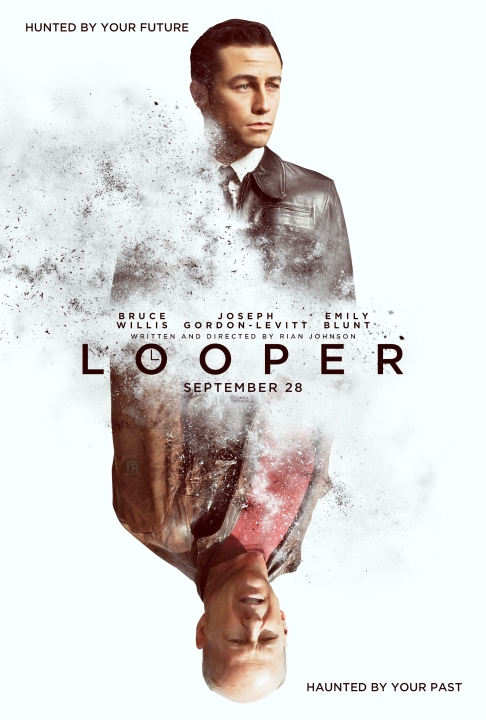
Culture Shock 01.31.13: 'Looper' is cinematic sleight of hand
Trying to wrap your head around time travel can give you a headache.
If you're Marty McFly, you have Doc Brown to explain it to you. If you're Bruce Willis' character in "Looper," you down handfuls of aspirin because time travel literally gives you a headache.
One must forgive any time travel movie its occasional plot holes or lapses in logic. The thing about time travel, by its very nature, is it creates plot holes. In the language of the genre, they're called "temporal anomalies." If you've seen any "Star Trek" after the original series, you've likely heard of them. But good filmmakers are clever enough to disguise them or make them part of the story or at least divert your attention from them.
With "Looper," writer/director Rian Johnson ("Brick") tries a little of all three and delivers one of the smartest, most entertaining science-fiction films in years — and one of the best films of the past year. Add another to the list of Oscar snubs.
"Looper" (Blu-ray and DVD) is set in the near future, around 2044. A few decades later, in 2074, our narrator tells us, time travel will be invented — and immediately outlawed. This works about as well outlawing liquor in the 1920s or marijuana today. When the mob wants to off someone, it sends them back in time to the 2040s, where paid assassins await the easy, untraceable kill.
The ubiquitous Joseph Gordon-Levitt ("The Dark Knight Rises") plays Joe, one of the mob's hired guns in 2044. These hired guns are called "loopers" because when the mob of the future decides to cancel their contracts, it sends the loopers' older counterparts back in time to be killed by their younger selves, completing the loop and leaving no loose ends. In return, the younger version earns a windfall retirement package.
That may seem like a bad deal, but as Joe says, the job doesn't exactly attract forward-thinking people. It attracts reckless young punks who doubt they'll even live another 30 years.
So, Joe lives the good life, while he can, bumping off people from the future and stockpiling silver until he suddenly finds his future self (Willis) on the other end of the gun.
And Old Joe does the unthinkable. He escapes.
Old Joe is trying to change the future, Young Joe is trying to kill Old Joe, and the mob — led by a charmingly droll Jeff Daniels ("The Newsroom") — is trying to eliminate both Joes. But that's not the half of it.
The bigger mystery comes into play when Young Joe, on the run, hides out with a young mother (Emily Blunt) and her brilliant but unsettling son, Cid (Pierce Gagnon).
Johnson pulls a few fast ones on us. First, he violates H.G. Wells' rule of science fiction: Change one thing and see what follows from it. Johnson changes two things. He introduces time travel, but he also posits humans who develop low-level telekinetic powers — an idea worth its own movie. It seems like a throwaway plot point at first, but it ends up being crucial.
Second, he covers up his biggest time-travel plot hole with a cinematic sleight of hand. If Old Joe escapes in 2044, how does Young Joe live out his life normally so he can he sent back in 2074? Johnson dodges the question by shifting the perspective. It goes from Young Joe to Old Joe remembering his days as Young Joe. It's a bit of a cheat, but all time travel stories are, and Johnson carries off his bait-and-switch so deftly you'd have to be a real curmudgeon to complain.
On the surface, "Looper" is a time-travel movie, but it's really about how we view the passage of time. Are we in it only for the short run? Can we sacrifice in the now for the sake of the future?
These are the sort of questions we ask ourselves all the time. We just don't have the future literally staring us in the face.
Thursday, July 19, 2012
Culture Shock 07.19.12: 'Safety Not Guaranteed' is worth the risk
There is a subset of romantic comedies in which one of the two lead characters approaches the other under false pretenses. Usually, the character is an undercover police detective or a journalist — a person pretending to be someone they're not.
This set-up leads to an inevitable confrontation. The betrayed character learns he or she has been lied to, and the cop/reporter/etc. character apologetically confesses all, maintaining that while everything else was false, their love is real. And it is, too.
You know this moment is coming, and if you're like me, you can spend an entire movie dreading it like a dog would dread a trip to the vet if dogs could read calendars. It's a ticking time bomb of movie clichés.
So, you must understand that it's high praise, coming from me, to say one of the best things about "Safety Not Guaranteed" is that when it gets to the scene where the reporter's cover is blown — that's not a spoiler; you know it's coming — the film handles it quickly, succinctly and moves on without too much fuss.
For those of you whose concerns aren't eccentric, know that "Safety Not Guaranteed," directed by Colin Trevorrow and written by Derek Connolly, is an utterly charming romantic comedy that will especially appeal to people who don't like typical romantic comedies.
The reporter — actually an intern — is Darius, played with her usual deadpan appeal by the geek goddess that is Aubrey Plaza ("Parks and Recreation").
When her boss at a hip, regional magazine decides to check out the story behind a bizarre classified ad, Darius is eager to tag along, as it's the first not-boring thing to come along.
The ad reads, in part: "WANTED: Someone to go back in time with me. This is not a joke. ... SAFETY NOT GUARANTEED."
That's enough to intrigue Darius, who has been isolated, aloof and generally alienated from her peers and their interests since her mother died years before.
So, Darius, nerdy fellow intern Arnau (Karan Soni) and smooth-talking reporter Jeff (Jake M. Johnson) take a road trip to find the person — probably a loon — who placed the ad.
Well, sort of. Jeff really just wants to use the trip as an excuse to hook up with an old girlfriend (Jenica Bergere) while making the interns do all the real work. As a journalist, I can tell you this is totally realistic.
That leaves Darius to approach the would-be time traveler and find out his story.
Kenneth (Mark Duplass) claims to have traveled back in time once before, and he is absolutely serious about his mission, which involves weapons training and an emergency plan to get a message to his future self if anything goes wrong in the past. Like Darius, he's alienated from the world around him, he just has an unorthodox way of dealing with it.
Duplass skillfully walks a fine line with Kenneth, making us root for him even as we wonder if he's entirely sane. And we also root for Jeff. In most romantic comedies, his character would be a one-dimensional jerk, but here he's a guy who is usually a jerk but also a real person. Again, as a journalist, I can confirm this is totally realistic.
That said, "Safety Not Guaranteed" is Plaza's movie to carry, and the cynical, world-weary, wise-beyond-her-years presence she bring to bear here signals that we're probably looking at the rise of a new indie-film queen.
That's not guaranteed, mind you. But then nothing worthwhile ever is.
Thursday, July 22, 2010
Culture Shock 07.22.10: 'Doctor Who' season finale plays with time
I've been a "Doctor Who" fan ever since I discovered reruns of the original series on public television in the 1980s.
My first Doctor was Tom Baker — the fourth Doctor overall, and, with his floppy hat and absurdly long scarf, the most recognizable one, at least until BBC Wales revived the show in 2005 and David Tennant (the 10th Doctor) became an international celebrity.
Fans usually say your first Doctor is always your favorite, and Baker still occupies my personal top spot. But the new Doctor, Matt Smith, is quickly gaining ground. And no offense to the legions of Tennant fans, but Smith's first year as the 11th Doctor almost has me asking, "David who?"
For the first time since it returned after a 16-year hiatus, the show feels like old-school "Doctor Who," albeit with a faster pace and glossier production values. And Smith's odd, brilliant and eccentric interpretation of our wandering Time Lord is a big part of that.
Season 5 of the new "Doctor Who" concludes Saturday at 8 p.m. on BBC America with "The Big Bang," which finds our time-traveling hero trapped in an inescapable prison and his companions Amy Pond (Karen Gillan) and River Song ("ER's" Alex Kingston) seemingly either dead or about to be. As far as cliffhangers go, that's pretty impressive. But for an extra inconvenience, the entire universe is about to cease ever having existed in the first place.
Or maybe it has already ceased existing. That's the problem with time travel. You're never sure when you are.
So, if you need to catch up, BBC America will also air the rest of season 5 during a marathon beginning at 8 a.m.
In the "The Big Bang," new producer and head writer Steven Moffat does what he does best, which is play with the concept of time travel. He's the one who put the term "timey wimey" into the geek lexicon with his season 3 "Doctor Who" story "Blink," where the Doctor uses it to explain unexplainable time paradoxes without really explaining them.
"The Big Bang" is all about the wibbly wobbly timey wimey stuff, even jumping back to episodes earlier in the season. For instance, how is the Doctor wearing his jacket in one scene in "Flesh and Stone" when he lost it earlier in the episode? Timey wimey.
For everyone wondering how "Doctor Who" would fare without Tennant and producer Russell T Davies, who oversaw the show's return from the mists of time, the answer is, just fine, thank you.
"The Big Bang" is the strongest finale since the program's return. And, top to bottom, season 5 ranks as possibly the best in the show's 47-year history. (The original series' season 14 with Baker and producer Philip Hinchcliffe, however, is also a contender for No. 1.)
For me, the highlight of Moffat's stories is the way he makes time itself an integral part of them. His "Doctor Who" isn't just a show about a character who travels through time. It's about playing with the idea of time.
Not everyone agrees with me. Charlie Jane Anders of io9.com writes that time travel has become an overused plot device. But I think it's about time "Doctor Who" started playing with time more often. The Doctor is a Time Lord. And even the original series was often at its best when time travel was a major plot point, for example in "City of Death" (another Fourth Doctor story), written by the legendary Douglas Adams ("The Hitchhiker's Guide to the Galaxy").
Moffat's most interesting timey wimey innovation is River Song, a future traveling companion of the Doctor's, whom he keeps meeting out of sequence, so she knows all about him, while he knows almost nothing about her. She keeps a diary, in which she has recorded the Doctor's future adventures, but she won't let him read it because it contains "spoilers."
As Doc Brown once told Marty McFly, you should never know too much about your own future.
But there's no need to panic. The Doctor's future is in good hands.
If only I had a time machine so I didn't have to wait until Christmas for the next episode.
My first Doctor was Tom Baker — the fourth Doctor overall, and, with his floppy hat and absurdly long scarf, the most recognizable one, at least until BBC Wales revived the show in 2005 and David Tennant (the 10th Doctor) became an international celebrity.
Fans usually say your first Doctor is always your favorite, and Baker still occupies my personal top spot. But the new Doctor, Matt Smith, is quickly gaining ground. And no offense to the legions of Tennant fans, but Smith's first year as the 11th Doctor almost has me asking, "David who?"
For the first time since it returned after a 16-year hiatus, the show feels like old-school "Doctor Who," albeit with a faster pace and glossier production values. And Smith's odd, brilliant and eccentric interpretation of our wandering Time Lord is a big part of that.
Season 5 of the new "Doctor Who" concludes Saturday at 8 p.m. on BBC America with "The Big Bang," which finds our time-traveling hero trapped in an inescapable prison and his companions Amy Pond (Karen Gillan) and River Song ("ER's" Alex Kingston) seemingly either dead or about to be. As far as cliffhangers go, that's pretty impressive. But for an extra inconvenience, the entire universe is about to cease ever having existed in the first place.
Or maybe it has already ceased existing. That's the problem with time travel. You're never sure when you are.
So, if you need to catch up, BBC America will also air the rest of season 5 during a marathon beginning at 8 a.m.
In the "The Big Bang," new producer and head writer Steven Moffat does what he does best, which is play with the concept of time travel. He's the one who put the term "timey wimey" into the geek lexicon with his season 3 "Doctor Who" story "Blink," where the Doctor uses it to explain unexplainable time paradoxes without really explaining them.
"The Big Bang" is all about the wibbly wobbly timey wimey stuff, even jumping back to episodes earlier in the season. For instance, how is the Doctor wearing his jacket in one scene in "Flesh and Stone" when he lost it earlier in the episode? Timey wimey.
For everyone wondering how "Doctor Who" would fare without Tennant and producer Russell T Davies, who oversaw the show's return from the mists of time, the answer is, just fine, thank you.
"The Big Bang" is the strongest finale since the program's return. And, top to bottom, season 5 ranks as possibly the best in the show's 47-year history. (The original series' season 14 with Baker and producer Philip Hinchcliffe, however, is also a contender for No. 1.)
For me, the highlight of Moffat's stories is the way he makes time itself an integral part of them. His "Doctor Who" isn't just a show about a character who travels through time. It's about playing with the idea of time.
Not everyone agrees with me. Charlie Jane Anders of io9.com writes that time travel has become an overused plot device. But I think it's about time "Doctor Who" started playing with time more often. The Doctor is a Time Lord. And even the original series was often at its best when time travel was a major plot point, for example in "City of Death" (another Fourth Doctor story), written by the legendary Douglas Adams ("The Hitchhiker's Guide to the Galaxy").
Moffat's most interesting timey wimey innovation is River Song, a future traveling companion of the Doctor's, whom he keeps meeting out of sequence, so she knows all about him, while he knows almost nothing about her. She keeps a diary, in which she has recorded the Doctor's future adventures, but she won't let him read it because it contains "spoilers."
As Doc Brown once told Marty McFly, you should never know too much about your own future.
But there's no need to panic. The Doctor's future is in good hands.
If only I had a time machine so I didn't have to wait until Christmas for the next episode.
Thursday, August 02, 2007
Soap opera physics could destroy the universe
You think about strange things when you’re stuck at home with a 103-degree fever and the room is spinning.
Did you know that the laws of physics don’t apply to soap operas? It’s true. For one thing, time in soap operas isn’t a constant.
One character can start the day on the other side of the world, hop on a jet and arrive home hours later. Meanwhile, another couple of characters can have a conversation over drinks. All the while, the soap opera cuts back and forth between the two scenes as if they’re taking place over the same period of time. Clearly, something isn’t right. Time is moving more quickly for some characters than it does for others.
It isn’t widely known, but this is the problem Albert Einstein was trying to solve when he formulated his theory of special relativity. It goes something like this: For any child separated from his or her parents on a soap opera, time will speed up by a factor of 10 until child and parents are reunited.
As a result, any child sent to boarding school for two years of Earth Standard Time will return 20 years older than when he or she left. Because of this, lots of 5-year-olds have left for kindergarten only to return a short time later, ready to produce children of their own.
Of course, if you fool around with the time stream as often as soap operas do, it’s inevitable that you’ll accidentally create alternate timelines, which are bound to give you lots of evil twins. That’s the real reason there are so many evil twins on daytime TV.
No daytime drama is a greater threat to the space-time continuum than “Days of Our Lives.” This, after all, is the soap that once had a major character possessed by the devil. Every time I accidentally watch an episode of “Days,” I’m confused. People who are supposed to be dead aren’t, and people who are supposed to be good have gone bad.
For example, Thaao Penghlis has played “Days” character Tony DiMera on and off since the early 1980s. In that time, Tony has been good, evil, alive and dead more times than I can count.
While waiting on my meds to kick in, I learned Tony is once again alive and apparently evil. Then I went to the drug store for more meds and saw a soap-opera tabloid that claimed Tony is his own evil twin. Or maybe he’s the good twin. Who can keep up? Probably Einstein could if he weren’t dead.
My fever finally broke, but not before I had a flashback to a confusing period when “Days” featured three actors all of whom had, at one time or another, played the same character. At that time, two of them were playing different roles, and the actor playing the part all three had in common was the one who had started his “Days” career as yet someone else.
Those “Days” folks sure do play fast and loose with the laws of the universe. It’ll be their fault when reality starts to unravel.
Did you know that the laws of physics don’t apply to soap operas? It’s true. For one thing, time in soap operas isn’t a constant.
One character can start the day on the other side of the world, hop on a jet and arrive home hours later. Meanwhile, another couple of characters can have a conversation over drinks. All the while, the soap opera cuts back and forth between the two scenes as if they’re taking place over the same period of time. Clearly, something isn’t right. Time is moving more quickly for some characters than it does for others.
It isn’t widely known, but this is the problem Albert Einstein was trying to solve when he formulated his theory of special relativity. It goes something like this: For any child separated from his or her parents on a soap opera, time will speed up by a factor of 10 until child and parents are reunited.
As a result, any child sent to boarding school for two years of Earth Standard Time will return 20 years older than when he or she left. Because of this, lots of 5-year-olds have left for kindergarten only to return a short time later, ready to produce children of their own.
Of course, if you fool around with the time stream as often as soap operas do, it’s inevitable that you’ll accidentally create alternate timelines, which are bound to give you lots of evil twins. That’s the real reason there are so many evil twins on daytime TV.
No daytime drama is a greater threat to the space-time continuum than “Days of Our Lives.” This, after all, is the soap that once had a major character possessed by the devil. Every time I accidentally watch an episode of “Days,” I’m confused. People who are supposed to be dead aren’t, and people who are supposed to be good have gone bad.
For example, Thaao Penghlis has played “Days” character Tony DiMera on and off since the early 1980s. In that time, Tony has been good, evil, alive and dead more times than I can count.
While waiting on my meds to kick in, I learned Tony is once again alive and apparently evil. Then I went to the drug store for more meds and saw a soap-opera tabloid that claimed Tony is his own evil twin. Or maybe he’s the good twin. Who can keep up? Probably Einstein could if he weren’t dead.
My fever finally broke, but not before I had a flashback to a confusing period when “Days” featured three actors all of whom had, at one time or another, played the same character. At that time, two of them were playing different roles, and the actor playing the part all three had in common was the one who had started his “Days” career as yet someone else.
Those “Days” folks sure do play fast and loose with the laws of the universe. It’ll be their fault when reality starts to unravel.
Subscribe to:
Posts (Atom)