Two icons returned this year, one with renewed relevance, the other creaking under his own pretensions.
Strangely, James Bond, the character who shouldn't work divorced from his Cold War origins, showed new energy. Meanwhile, the supposedly timeless Superman, remained as stiff and lifeless as ever, not so much the Man of Steel as the man of rigor mortis.
Daniel Craig's steely eyed Bond in "Casino Royale" is as close as the movies have come to capturing the ruthless, flawed character of Ian Fleming's novels. The new Bond is lean, mean and rough-hewn. He fits in comfortably with the threats of the 21st century.
The clear divide between East and West, communist and capitalist, is gone. The good guys won, and, apart from Cuba and North Korea, even the communists are capitalists now. The new map is a fractured landscape of terrorists, crime syndicates and rogue states. You have to be nimble to keep your footing, and Craig's Bond shows us that he is — both literally, during the movie's foot-chase sequence, and figuratively, by actually growing as a character.
Superman, however, never grows. Officially, he is the champion of truth, justice and the American way, however vaguely defined. But in practice, he is the heavy-handed enforcer of the status quo and the Establishment. He started as the poster boy for the New Deal and, later, 1950s conformity. In the 1980s, writer/artist Frank Miller realized this and cast Superman as a puppet of a corrupt government in his graphic novel "Batman: The Dark Knight Returns."
This year, as played by Brandon Routh in "Superman Returns," Superman is an uneasy combination of underwear model and savior. Director and co-writer Bryan Singer sees Superman as a divine figure. He especially goes overboard with a scene in which Lex Luthor's henchmen beat the Kryptonite-poisoned Superman nearly to death in the mud. It's all shamelessly reminiscent of Mel Gibson's "Passion of the Christ."
Singer leaves no doubt that he thinks Superman, the strange visitor from another planet, is way better than us mere humans. While Miller distrusts authority and gives us a Superman degraded by his close proximity to it, Singer gives us a morally superior overlord. Miller has faith in humanity, while Singer puts his faith with the gods on Mount Olympus.
After the failures of Iraq and Katrina, Singer's faith in the great leader seems quaint at best and dangerous at worst. Worse still, his Superman is a cipher. You can read into him whatever values you like, but that doesn't mean you'll be right. Superman is like a politician who gives pleasant speeches utterly free of content. He's Barack Obama.
Dressed up as an ennobling figure, the Superman of "Superman Returns" is really a cynical reflection of everything wrong with the world — a pretend savior who can't deliver.
Meanwhile, the James Bond of "Casino Royale" may be a cynical killer, but he is honest about who he is. He is a blunt instrument in a messed-up world — an everyman hero, but cooler. His way of fixing things isn't pretty, but it's better than waiting for Superman to save us.
Thursday, December 28, 2006


Thursday, December 21, 2006
Culture Shock 12.21.06: Non-Christian elements of Christmas there from start
'Twas the week before Christmas, Bill O'Reilly in view
Shouting on the TV as his face turns Yuletide hue.
While his Fox pal John Gibson wrote a book just to say,
"There's a 'War on Christmas'! Purchase your copies today!"
OK, I'll stop now. You get the point. But, really, enough with the "war on Christmas" stuff already. With the shopping and the crowds, folks have enough to worry about without opportunistic blowhards making up a controversy.
Putting the name aside for a minute, Christmas has never been just about Christ. Early church fathers set the date for Christmas to coincide with (and co-opt) pre-existing pagan festivals centered on the winter solstice. Pagan elements have been with the holiday ever since, including the venerable Christmas tree. In fact, it was exactly such non-Christian aspects of the holiday that led many Protestants to virtually ignore Christmas until the Victorian era.
If you think Christmas is "too commercial," blame those same Victorians. They started the commercialization of Christmas back in the late 1800s, along with its transformation into a semi-secular holiday of gift giving and family togetherness. It's that commercialization that made Christmas "safe" for Christians who had religious objections to the celebration.
If keeping the Christ in Christmas meant leaving out everything else, then the result wouldn't really be Christmas. Besides, if O'Reilly and Gibson are looking for a fight, someone should tell them they've already lost.
The secular side of Christmas is firmly part of American culture, and it goes deeper than Rudolph, Frosty, saying "Happy Holidays" instead of "Merry Christmas" and bland Christmastime love songs by The Carpenters played ad infinitum.
The secular Christmas won when "A Christmas Story," the 1983 comedy about a boy's quest to get the ultimate present — a Red Ryder BB gun with a compass in the stock and a thing that tells time — replaced "It's a Wonderful Life" as Christmas Day marathon viewing.
"A Christmas Story" is our new seasonal fairy tale. And it's all about presents and commercialism, with a dash of (dysfunctional) family togetherness tossed in for good measure. It doesn't have a manger scene, but it does have a Little Orphan Annie decoder ring.
The movie appeals to Americans because it appeals to the child in us all. Sure, my childhood Christmas is several decades removed from the early 1940s Christmas of Ralphie and his Red Ryder. For me, it was an Atari 2600, but the spirit is the same. We associate particular Christmases with what we got, and that reminds us of where we got it.
Given its diverse origins — Christian, Roman, Germanic, etc. — it's only proper that Christmas has returned to being a near universal celebration. It's observed even in Japan, where it's become strangely associated with romance and dining on KFC.
Christmas is both secular and religious, commercial and spiritual, Christian and pagan. It has something to offer everyone, including a message of "peace on Earth and goodwill toward men." The wording may be Christian, but the sentiment has many sources.
Shouting on the TV as his face turns Yuletide hue.
While his Fox pal John Gibson wrote a book just to say,
"There's a 'War on Christmas'! Purchase your copies today!"
OK, I'll stop now. You get the point. But, really, enough with the "war on Christmas" stuff already. With the shopping and the crowds, folks have enough to worry about without opportunistic blowhards making up a controversy.
Putting the name aside for a minute, Christmas has never been just about Christ. Early church fathers set the date for Christmas to coincide with (and co-opt) pre-existing pagan festivals centered on the winter solstice. Pagan elements have been with the holiday ever since, including the venerable Christmas tree. In fact, it was exactly such non-Christian aspects of the holiday that led many Protestants to virtually ignore Christmas until the Victorian era.
If you think Christmas is "too commercial," blame those same Victorians. They started the commercialization of Christmas back in the late 1800s, along with its transformation into a semi-secular holiday of gift giving and family togetherness. It's that commercialization that made Christmas "safe" for Christians who had religious objections to the celebration.
If keeping the Christ in Christmas meant leaving out everything else, then the result wouldn't really be Christmas. Besides, if O'Reilly and Gibson are looking for a fight, someone should tell them they've already lost.
The secular side of Christmas is firmly part of American culture, and it goes deeper than Rudolph, Frosty, saying "Happy Holidays" instead of "Merry Christmas" and bland Christmastime love songs by The Carpenters played ad infinitum.
The secular Christmas won when "A Christmas Story," the 1983 comedy about a boy's quest to get the ultimate present — a Red Ryder BB gun with a compass in the stock and a thing that tells time — replaced "It's a Wonderful Life" as Christmas Day marathon viewing.
"A Christmas Story" is our new seasonal fairy tale. And it's all about presents and commercialism, with a dash of (dysfunctional) family togetherness tossed in for good measure. It doesn't have a manger scene, but it does have a Little Orphan Annie decoder ring.
The movie appeals to Americans because it appeals to the child in us all. Sure, my childhood Christmas is several decades removed from the early 1940s Christmas of Ralphie and his Red Ryder. For me, it was an Atari 2600, but the spirit is the same. We associate particular Christmases with what we got, and that reminds us of where we got it.
Given its diverse origins — Christian, Roman, Germanic, etc. — it's only proper that Christmas has returned to being a near universal celebration. It's observed even in Japan, where it's become strangely associated with romance and dining on KFC.
Christmas is both secular and religious, commercial and spiritual, Christian and pagan. It has something to offer everyone, including a message of "peace on Earth and goodwill toward men." The wording may be Christian, but the sentiment has many sources.
Thursday, December 14, 2006
Culture Shock 12.14.06: 'Star Trek's' 40th birthday flies past at warp speed
Somehow, the year is almost gone. And yet hardly a word has been said about 2006 marking the 40th anniversary of an American institution.
It was in 1966, by way of the 23rd century, that the starship Enterprise set forth on its storied five-year mission. But four decades later, “Star Trek” has entered turbulent seas, or their outer-space equivalent.
For the first time since 1985, “Star Trek” is absent from both TV and movie screens, unless you count reruns. The only “new” Trek to be had is the 1973 animated series, which made its long-awaited debut on DVD last month, and the original series, returned to syndication with new, high-tech special effects in place of the ’60s-vintage models and matte paintings.
While it’s sad to see Trek’s anniversary pass quietly in the night, the Franchise, as it’s become known, clearly needs a rest. Its decline in quality, starting with the final two seasons of “Star Trek: The Next Generation” and reaching rock bottom with “Star Trek: Voyager” and “Enterprise,” made a breather inevitable. Simply put, the creative team in charge of the Franchise at the bitter end had nothing left.
“Star Trek” had gotten away from the original vision of creator Gene Roddenberry and producer Gene L. Coon. And the attempt to recapture some of that frontier spirit during the last season of “Enterprise” couldn’t overcome that show’s dull, backward-looking premise. Prequels, by definition, don’t boldly go where no man has gone before.
The next “Star Trek” film, reportedly planned for 2008, is also rumored to be a prequel. If so, Trek’s keepers haven’t learned their lesson yet.
The original “Star Trek” was inspirational. Literally. You don’t have to look far to find scientists, engineers and astronauts inspired to enter their chosen fields by “Star Trek.”
But who could be inspired by Trek’s recent incarnations? By the time “Enterprise” was canceled, Trek was looking inward, at its own increasingly convoluted past, not outward.
Oddly enough, while “Star Trek” is slowly becoming a parody of itself, many of the people who have long lived in the Franchise’s shadow are finally emerging.
After winning two Emmy Awards for his portrayal of “Boston Legal” attorney Denny Crane, it’s safe to say that William Shatner has found a role to finally rival, if not eclipse, Capt. James T. Kirk. Leonard Nimoy has left behind Mr. Spock and found a new calling as a photographer, mostly photographing nude women, which is nice work if you can get it. Even George Takei, better known as Lt. Sulu, has moved on, recently taking a supporting role on the hit NBC series “Heroes.”
Sure, lots of “Star Trek” fans, too many in fact, will fawn all over anything bearing the Trek logo.
But those of us who really care about Roddenberry’s creation deserve better. And we’re willing to wait for it. No “Star Trek” at all is better than Trek in name only.
Still, the lack of recognition on Trek’s 40th anniversary is almost shameful. You can be sure that George Lucas won’t let 2007 pass without everyone on the planet knowing that it’s the 30th anniversary of “Star Wars.” And, if anything, the “Star Wars” franchise is even more tarnished than the Trek franchise.
What was I just saying about prequels being a bad idea?
It was in 1966, by way of the 23rd century, that the starship Enterprise set forth on its storied five-year mission. But four decades later, “Star Trek” has entered turbulent seas, or their outer-space equivalent.
For the first time since 1985, “Star Trek” is absent from both TV and movie screens, unless you count reruns. The only “new” Trek to be had is the 1973 animated series, which made its long-awaited debut on DVD last month, and the original series, returned to syndication with new, high-tech special effects in place of the ’60s-vintage models and matte paintings.
While it’s sad to see Trek’s anniversary pass quietly in the night, the Franchise, as it’s become known, clearly needs a rest. Its decline in quality, starting with the final two seasons of “Star Trek: The Next Generation” and reaching rock bottom with “Star Trek: Voyager” and “Enterprise,” made a breather inevitable. Simply put, the creative team in charge of the Franchise at the bitter end had nothing left.
“Star Trek” had gotten away from the original vision of creator Gene Roddenberry and producer Gene L. Coon. And the attempt to recapture some of that frontier spirit during the last season of “Enterprise” couldn’t overcome that show’s dull, backward-looking premise. Prequels, by definition, don’t boldly go where no man has gone before.
The next “Star Trek” film, reportedly planned for 2008, is also rumored to be a prequel. If so, Trek’s keepers haven’t learned their lesson yet.
The original “Star Trek” was inspirational. Literally. You don’t have to look far to find scientists, engineers and astronauts inspired to enter their chosen fields by “Star Trek.”
But who could be inspired by Trek’s recent incarnations? By the time “Enterprise” was canceled, Trek was looking inward, at its own increasingly convoluted past, not outward.
Oddly enough, while “Star Trek” is slowly becoming a parody of itself, many of the people who have long lived in the Franchise’s shadow are finally emerging.
After winning two Emmy Awards for his portrayal of “Boston Legal” attorney Denny Crane, it’s safe to say that William Shatner has found a role to finally rival, if not eclipse, Capt. James T. Kirk. Leonard Nimoy has left behind Mr. Spock and found a new calling as a photographer, mostly photographing nude women, which is nice work if you can get it. Even George Takei, better known as Lt. Sulu, has moved on, recently taking a supporting role on the hit NBC series “Heroes.”
Sure, lots of “Star Trek” fans, too many in fact, will fawn all over anything bearing the Trek logo.
But those of us who really care about Roddenberry’s creation deserve better. And we’re willing to wait for it. No “Star Trek” at all is better than Trek in name only.
Still, the lack of recognition on Trek’s 40th anniversary is almost shameful. You can be sure that George Lucas won’t let 2007 pass without everyone on the planet knowing that it’s the 30th anniversary of “Star Wars.” And, if anything, the “Star Wars” franchise is even more tarnished than the Trek franchise.
What was I just saying about prequels being a bad idea?
Thursday, December 07, 2006
Culture Shock 12.07.06: Science fiction's outsiders find new respectability

There are snooty critics who see it symptomatic of civilization's decline. But the American literary canon is finally expanding to encompass some of our most influential, yet neglected, writers.
The Associated Press reported last week that the Library of America will release in 2007 a volume devoted to science-fiction writer Philip K. Dick. Although there is no shortage of Dick's stories in print, this is significant news because the Library of America is the closest thing the U.S. has to an official literary gatekeeper. If the L of A publishes your work, you are a Significant Author. To be part of the Library of America is to be one with Faulkner, Fitzgerald, Hawthorne and Melville.
"Philip K. Dick: Four Novels of the 1960s" is scheduled for publication in June. It will include the novels "The Man in the High Castle," "The Three Stigmata of Palmer Eldritch," "Ubik" and "Do Androids Dream of Electric Sheep?" The last of those was made into the 1982 Harrison Ford movie "Blade Runner."
Jonathan Lethem is editing the volume. Lethem, author of "Motherless Brooklyn" and "The Fortress of Solitude," is considered a "literary" author, although he actually has written quite a bit of genre fiction, including the futuristic "Gun, with Occasional Music." But although Lethem sometimes writes science fiction, his books aren't marketed as science fiction. He isn't confined to the ghetto as was Dick, who died in 1982.
And he's happy to do his part to assist Dick's escape. In an interview with the blog The Elegant Variation, Lethem said, "I'm helping preside over the utter and irreversible canonization of one of my (formerly outsider) heroes ..."
But Dick's ascendance to the literati firmament wouldn't mean much if it were merely an isolated incident. It isn't.
Last year, the Library of America elevated an even more unfairly maligned and neglected figure of genre fiction: H.P. Lovecraft. And it was the positive response to "Lovecraft: Tales" that helped spawn the Dick collection, according Max Rudin, Library of America publisher, in an interview with the AP.
Lovecraft is America's most important horror writer since Edgar Allan Poe, although, like Poe, he seems to have earned greater respect in France, for whatever reason.
The works of science fiction/fantasy writers Ray Bradbury and Ursula K. Le Guin could be the subject of future L of A volumes, Rudin said.
Genre writers are at last getting their due, just three years after the National Book Foundation controversially gave Stephen King its Distinguished Contribution to American Letters Award and sent the snobs into apoplectic fits.
"But giving an award like this to a guy like me suggests that in the future things don't have to be the way they've always been. Bridges can be built between the so-called popular fiction and the so-called literary fiction," King said in his acceptance speech.
It's a two-way street. When Philip Roth, an undeniable member of the Literary Establishment, delves into science fiction with an alternate history novel like "The Plot Against America," it becomes far harder for critics to ignore those who've plowed the fields of SF for decades. Then the critics might learn that Roth's plot is such a cliche in SF circles that even most hacks wouldn't touch it without giving it some new twist.
If mainstream critics are forced to read unapologetic science fiction, horror and fantasy, there's no telling who will be admitted to the canon of respectable literature next. I suggest Harlan Ellison.
Thursday, November 30, 2006
Culture Shock 11.30.06: O.J. book, interview could become karmic payback
Last week, the New York tabloids and cable news pundits were buzzing about O.J. Simpson's canceled book, "If I Did It," which was going for thousands of dollars on eBay.
I have no problem with people making a buck off the few copies of O.J.'s book that slipped through the cracks after the publisher, HarperCollins, recalled copies that already had been shipped to stores. The only person I don't want making money from "If I Did It" is O.J. Simpson.
A quick search of eBay on Sunday afternoon, however, turned up no copies of "If I Did It" for sale. According to an eBay spokesman, the online auction site is removing the book at HarperCollins' request. This is no surprise, as eBay routinely removes items at the request of big media companies.
But my search for "If I Did It" did turn up someone selling a poster of Simpson.
The poster depicted an intense — one might even say "mean" — Simpson from his football days. And beneath the photo of O.J. was the caption, "If I Did It?" Emphasis on the "if."
Next, I searched YouTube to see if O.J.'s canceled two-part Fox interview had been leaked to the Internet. I've got to hand it to Fox, they've managed to keep a lid on the interview so far. All I found was a nine-second video called "Bootleg OJ Simpson Interview." It's simply a still photo of O.J. followed by the caption, "Why would you sick (expletive deleted) support OJ by watching his interview???"
Now, as I see it, watching a bootleg of O.J.'s interview isn't supporting him. If anything, it's ripping him off, which makes it a good thing.
Unless Beelzebub has a devil put aside for him, O.J. has escaped justice. Incompetent prosecutors and delusional jurors saved Simpson from prison. And even though Simpson lost a civil lawsuit, he has yet to pay a penny to the families of Ronald Goldman and Nicole Brown Simpson.
The only weapon we have left against O.J. is ridicule. Which is why I want his disgusting and absurd book and interview to leak out to the public. Only then can skilled comedians and amateur filmmakers pick apart every sentence and every frame and turn them back on Simpson.
Face it, the jokes about how O.J. won't rest until he finds the "real killers," who are hiding on some golf course or in some strip bar somewhere in America, are getting old. We need new material.
You may be thinking that it's a worse punishment for O.J. simply to ignore him rather than to pay him the attention necessary for ridiculing him. And you may be right. But there is more to this than O.J.
I'm thinking of all of the people who cheered when O.J. got off. I'm thinking of all the people who think O.J. is actually innocent.
There are people in this country who believe lots of downright stupid things. They believe extraterrestrial beings from planets hundreds of light years away come to the Earth just to dissect cattle and anally probe farmers.
But it's a rare occasion when people actually get punished for believing stupid things. A rare example occurred on Jan. 1, 2000, when a lot of people woke up to find that the world's computers had not failed, civilization had not collapsed, and the thousands of dollars of survival gear in the basement was not a good investment.
O.J.'s book and interview could have been a long-overdue case of karmic comeuppance for everyone who actually thought he was innocent. If they leak to the Internet, they still could be.
I have no problem with people making a buck off the few copies of O.J.'s book that slipped through the cracks after the publisher, HarperCollins, recalled copies that already had been shipped to stores. The only person I don't want making money from "If I Did It" is O.J. Simpson.
A quick search of eBay on Sunday afternoon, however, turned up no copies of "If I Did It" for sale. According to an eBay spokesman, the online auction site is removing the book at HarperCollins' request. This is no surprise, as eBay routinely removes items at the request of big media companies.
But my search for "If I Did It" did turn up someone selling a poster of Simpson.
The poster depicted an intense — one might even say "mean" — Simpson from his football days. And beneath the photo of O.J. was the caption, "If I Did It?" Emphasis on the "if."
Next, I searched YouTube to see if O.J.'s canceled two-part Fox interview had been leaked to the Internet. I've got to hand it to Fox, they've managed to keep a lid on the interview so far. All I found was a nine-second video called "Bootleg OJ Simpson Interview." It's simply a still photo of O.J. followed by the caption, "Why would you sick (expletive deleted) support OJ by watching his interview???"
Now, as I see it, watching a bootleg of O.J.'s interview isn't supporting him. If anything, it's ripping him off, which makes it a good thing.
Unless Beelzebub has a devil put aside for him, O.J. has escaped justice. Incompetent prosecutors and delusional jurors saved Simpson from prison. And even though Simpson lost a civil lawsuit, he has yet to pay a penny to the families of Ronald Goldman and Nicole Brown Simpson.
The only weapon we have left against O.J. is ridicule. Which is why I want his disgusting and absurd book and interview to leak out to the public. Only then can skilled comedians and amateur filmmakers pick apart every sentence and every frame and turn them back on Simpson.
Face it, the jokes about how O.J. won't rest until he finds the "real killers," who are hiding on some golf course or in some strip bar somewhere in America, are getting old. We need new material.
You may be thinking that it's a worse punishment for O.J. simply to ignore him rather than to pay him the attention necessary for ridiculing him. And you may be right. But there is more to this than O.J.
I'm thinking of all of the people who cheered when O.J. got off. I'm thinking of all the people who think O.J. is actually innocent.
There are people in this country who believe lots of downright stupid things. They believe extraterrestrial beings from planets hundreds of light years away come to the Earth just to dissect cattle and anally probe farmers.
But it's a rare occasion when people actually get punished for believing stupid things. A rare example occurred on Jan. 1, 2000, when a lot of people woke up to find that the world's computers had not failed, civilization had not collapsed, and the thousands of dollars of survival gear in the basement was not a good investment.
O.J.'s book and interview could have been a long-overdue case of karmic comeuppance for everyone who actually thought he was innocent. If they leak to the Internet, they still could be.
Thursday, November 23, 2006
Culture Shock 11.23.06: The War on Thanksgiving, the forgotten holiday
I gather today is some sort of holiday. Now what is it? Turkey Day? No. That's not right. Oh, yes. Thanksgiving. How could I forget?
Well, it's easy to lose track of a holiday that has been squeezed almost to a singularity by the juggernauts of Christmas and Halloween.
In terms of the amount of money Americans spend on them every year, Christmas and Halloween are easily the country's two most popular celebrations. And that's even without anyone getting a paid day off for tricks or treats.
Thanksgiving is under assault. You might as well call it "Official Start of the Christmas Season Eve." People used to get upset when stores and shopping malls put up Christmas decorations before Thanksgiving. Now, some stores put them up before Halloween. Some people complain about a "War on Christmas," in which Christmas is losing ground to other, more "politically correct" holidays. But Christmas has it easy compared to Thanksgiving.
Yes, dear readers, whether you've noticed it or not, we're in the midst of a War on Thanksgiving. And Thanksgiving is folding faster than the Polish cavalry in front of a Panzer division. It's time to take sides.
So, let me be clear about this — Down with Thanksgiving!
Now, nobody is going to quibble with a day off work, so assume that if we abolish Thanksgiving, we'll get something else in return.
Let's face it. What's Thanksgiving for? Giving thanks? Well, if that's all, I don't need a holiday to do that, and if I do, how thankful am I, really?
Mostly, Thanksgiving is for watching football and family gatherings. The last time I checked, there was no shortage of pro football on TV, even on days not devoted to the ritual consumption of poultry.
But what about all that family togetherness? That's all well and good, I suppose, if watching Aunt Margaret and Aunt Jill down a dozen glasses of sherry between them and then argue about which one of them Grandma really wanted to have the good china is your idea of a spectator sport.
Maybe Charles Schulz can help us? After all, the beloved creator of Charlie Brown and Snoopy did write a cartoon to explain the true meaning of Christmas. Nope. The only life lesson I've taken away from "A Charlie Brown Thanksgiving" is that jelly beans and popcorn do not go over well as Thanksgiving dinner.
Maybe Thanksgiving is simply the day when we remember the Pilgrims, who, according to all the history books, came to America in search of religious freedom.
I hate to burst your bubble — well, actually, this is the sort of thing I live for — but the Pilgrims didn't come to the New World for religious freedom.
When they first left England, the Pilgrims went to Holland, the most tolerant society the world had seen up to that time. The Pilgrims had all the religious freedom there they could stand. In fact, they had too much, and were aghast that their children were taking advantage of the freedoms Holland offered. So, they packed up and came to America, not to get religious freedom, but to get away from it.
Other people can celebrate that sort of thing if they want, but count me out.
Well, it's easy to lose track of a holiday that has been squeezed almost to a singularity by the juggernauts of Christmas and Halloween.
In terms of the amount of money Americans spend on them every year, Christmas and Halloween are easily the country's two most popular celebrations. And that's even without anyone getting a paid day off for tricks or treats.
Thanksgiving is under assault. You might as well call it "Official Start of the Christmas Season Eve." People used to get upset when stores and shopping malls put up Christmas decorations before Thanksgiving. Now, some stores put them up before Halloween. Some people complain about a "War on Christmas," in which Christmas is losing ground to other, more "politically correct" holidays. But Christmas has it easy compared to Thanksgiving.
Yes, dear readers, whether you've noticed it or not, we're in the midst of a War on Thanksgiving. And Thanksgiving is folding faster than the Polish cavalry in front of a Panzer division. It's time to take sides.
So, let me be clear about this — Down with Thanksgiving!
Now, nobody is going to quibble with a day off work, so assume that if we abolish Thanksgiving, we'll get something else in return.
Let's face it. What's Thanksgiving for? Giving thanks? Well, if that's all, I don't need a holiday to do that, and if I do, how thankful am I, really?
Mostly, Thanksgiving is for watching football and family gatherings. The last time I checked, there was no shortage of pro football on TV, even on days not devoted to the ritual consumption of poultry.
But what about all that family togetherness? That's all well and good, I suppose, if watching Aunt Margaret and Aunt Jill down a dozen glasses of sherry between them and then argue about which one of them Grandma really wanted to have the good china is your idea of a spectator sport.
Maybe Charles Schulz can help us? After all, the beloved creator of Charlie Brown and Snoopy did write a cartoon to explain the true meaning of Christmas. Nope. The only life lesson I've taken away from "A Charlie Brown Thanksgiving" is that jelly beans and popcorn do not go over well as Thanksgiving dinner.
Maybe Thanksgiving is simply the day when we remember the Pilgrims, who, according to all the history books, came to America in search of religious freedom.
I hate to burst your bubble — well, actually, this is the sort of thing I live for — but the Pilgrims didn't come to the New World for religious freedom.
When they first left England, the Pilgrims went to Holland, the most tolerant society the world had seen up to that time. The Pilgrims had all the religious freedom there they could stand. In fact, they had too much, and were aghast that their children were taking advantage of the freedoms Holland offered. So, they packed up and came to America, not to get religious freedom, but to get away from it.
Other people can celebrate that sort of thing if they want, but count me out.
Thursday, November 16, 2006
Culture Shock 11.16.06: Pop culture's diversity is its strength
If there is one thing about which pundits both left and right agree, it's that American culture is rotten. So rotten, in fact, that it threatens the rest of the world.
On the left, author John Tirman includes TV and pop culture among his list of "100 Ways America Is Screwing Up the World." On the right, Karen Hughes, a longtime advisor to President Bush, was quoted recently saying, "One of the things I hear a lot, particularly in deeply conservative societies, is that parents feel kind of assaulted by American culture."
Oddly enough, the disgust of high-culture elitists on the left and the alarm of cultural moralists on the right share the same source. American culture is, in fact, more robust, more vibrant and more populist than ever before. And that, to many on both sides of the political spectrum, is exactly the problem.
We live in a world of 100-plus channel TV, and with a TiVo, you can, for all practical purposes, program your own station. If that isn't enough, you can now download many TV shows via the Internet, often free of charge, as with Fox's offerings at MySpace.com. And if you're still not satisfied, even the most obscure shows of years gone by are available on DVD.
The Golden Age of Television isn't the bygone era of "Mr. Ed." It's today. Sure, you probably think 90 percent of everything on TV is a waste of time, and I agree. But there is now unprecedented diversity in American television. Competition between broadcast and cable TV stations, combined with growing competition from the Internet, is driving up the quality of that 10 percent of programming that is worth watching.
But what constitutes that 10 percent depends upon whom you ask. If you ask me, the SciFi Channel's "Battlestar Galactica" is not only the best show on TV, it's one of the best shows ever, and Fox's "House" runs a close second.
Other people swear by "Lost" or "Grey's Anatomy," which are perfectly respectable choices, too. And others still worship at the altar of "American Idol," proving there's no accounting for taste.
But even if I hate "American Idol," that's not the point. I'm sure there are lots of people who would never watch "Battlestar Galactica." The point is, TV is now big enough for all of us. We're not limited to three broadcast networks plus British imports on PBS.
In the "good old days," TV was aimed at a mass audience. It was OK. We liked it. But is there a single show of the so-called Golden Age (besides the original "Star Trek") that inspires the rabid devotion of today's cult hits?
Today's shows are aimed at a far more fragmented audience. Shows don't have to be everything to everyone. We can point our satellite dishes upward at a galaxy of possibilities.
TV isn't alone. Over-the-air radio may seem increasingly bland, but with iPods and the ability to download music and talk programming from the Internet, there is something for everyone. Literally.
If "The Simple Life" is the price I have to pay for "Boston Legal," so be it. I don't have to pay attention to Paris Hilton, and you don't have to watch William Shatner. But at least we both have a choice.
On the left, author John Tirman includes TV and pop culture among his list of "100 Ways America Is Screwing Up the World." On the right, Karen Hughes, a longtime advisor to President Bush, was quoted recently saying, "One of the things I hear a lot, particularly in deeply conservative societies, is that parents feel kind of assaulted by American culture."
Oddly enough, the disgust of high-culture elitists on the left and the alarm of cultural moralists on the right share the same source. American culture is, in fact, more robust, more vibrant and more populist than ever before. And that, to many on both sides of the political spectrum, is exactly the problem.
We live in a world of 100-plus channel TV, and with a TiVo, you can, for all practical purposes, program your own station. If that isn't enough, you can now download many TV shows via the Internet, often free of charge, as with Fox's offerings at MySpace.com. And if you're still not satisfied, even the most obscure shows of years gone by are available on DVD.
The Golden Age of Television isn't the bygone era of "Mr. Ed." It's today. Sure, you probably think 90 percent of everything on TV is a waste of time, and I agree. But there is now unprecedented diversity in American television. Competition between broadcast and cable TV stations, combined with growing competition from the Internet, is driving up the quality of that 10 percent of programming that is worth watching.
But what constitutes that 10 percent depends upon whom you ask. If you ask me, the SciFi Channel's "Battlestar Galactica" is not only the best show on TV, it's one of the best shows ever, and Fox's "House" runs a close second.
Other people swear by "Lost" or "Grey's Anatomy," which are perfectly respectable choices, too. And others still worship at the altar of "American Idol," proving there's no accounting for taste.
But even if I hate "American Idol," that's not the point. I'm sure there are lots of people who would never watch "Battlestar Galactica." The point is, TV is now big enough for all of us. We're not limited to three broadcast networks plus British imports on PBS.
In the "good old days," TV was aimed at a mass audience. It was OK. We liked it. But is there a single show of the so-called Golden Age (besides the original "Star Trek") that inspires the rabid devotion of today's cult hits?
Today's shows are aimed at a far more fragmented audience. Shows don't have to be everything to everyone. We can point our satellite dishes upward at a galaxy of possibilities.
TV isn't alone. Over-the-air radio may seem increasingly bland, but with iPods and the ability to download music and talk programming from the Internet, there is something for everyone. Literally.
If "The Simple Life" is the price I have to pay for "Boston Legal," so be it. I don't have to pay attention to Paris Hilton, and you don't have to watch William Shatner. But at least we both have a choice.
Tuesday, March 28, 2006
The (super) power of words
The Los Angeles Times weighs in against Marvel and DC's joint trademark of the term "super hero" and its variations:
(Link via Neilalien.)
In trademark law, the more unusual a term, the more it qualifies for protection. We would have no quarrel with Marvel and DC had they called their superheroes "actosapiens," then trademarked that. But purely generic terms aren't entitled to protection, at least in theory. The reason is simple: Trademarks restrict speech, and to put widely used terms under private control is an assault on our language.
(Link via Neilalien.)
Friday, March 24, 2006
P is for PAD
Make a note of this moment because this will probably never happen again: I agree 100 percent with Peter David:
What he said. Now, go read the entire post and the comments.
If I see one more article about Alan Moore being "swindled" by DC or how Hollywood has destroyed his graphic novel, I'm going to go on a vendetta of my own.
What he said. Now, go read the entire post and the comments.
Monday, March 20, 2006
Super thieves
SF writer Cory Doctorow is mad as hell about Marvel and DC's joint attempt to monopolize the term "super-hero":
(Link via Neilalien.)
"Super-hero" isn't Marvel's property. They didn't invent the term. They aren't the only users of the term. It's a public-domain word that belongs to all of us. Adding a ™ to super-hero is a naked bid to steal "super-hero" from us and claim it for their own.
(Link via Neilalien.)
February by the numbers
ICv2.com has posted its monthly breakdown of comics sales: the Top 100 graphic novels and the Top 300 floppies. The return of Astonishing X-Men gave Marvel the No. 1 slot on the Top 300, but DC held it's own, filling half of the top 10 spots, including two issues of Supergirl and two issues of Green Lantern. (How on Earth did Supergirl become a top 10 book?)
The circulation of 13 of the top 25 floppies was up over their previous issues.
The circulation of 13 of the top 25 floppies was up over their previous issues.
Sunday, March 19, 2006
B is for box office
V for Vendetta did anything but bomb this weekend, taking in an estimated $26.1 million on 3,365 screens to debut at No. 1. Box Office Mojo crunches the numbers:
Dystopian visions of the future frequently have trouble finding an audience in theaters, from Blade Runner to The Island, Brazil to Equilibrium. Throw in a potentially off-putting protagonist in its always-masked freedom fighter, and V for Vendetta was a tough sell, rendering its opening a solid success despite industry speculation that it could bow to north of $30 million.
D&D to DVD
Mark Evanier has revealed that he is recording extras for the upcoming DVD release of the Dungeons & Dragons cartoon series.
Friday, March 17, 2006
Face front, true believers!

PR.com interviews (if you can consider public relations an "interview") Stan Lee about his life, art, and future business ventures:
PR.com: And now with POW! Entertainment, you have 40 original projects that are currently in development?
Stan Lee: Well I haven't counted them but I think that's a good guess. Yeah, we have any number of things that are in some process or some stage of development or production.
PR.com: And this has nothing to do with comics, they're being produced strictly for television and for film?
Stan Lee: That's right. Television, films, DVD's, telephone-mobisodes (mini episodic television for mobile phones). Some of them may end up also being comic books. Very often a movie producer will say, "Can we do a comic book to promote this prospective movie?" or something like that. And certainly there's no reason not to do comics, but basically we're a film and animation company.
Holy copyright!
The Center for the Study of the Public Domain, has produced a comic book to teach people about the ins and outs of copyright law:
The book follows the story of a documentary maker putting together a film about life in New York City. ("Trapped by a STRUGGLE she didn't understand.... By day a FILM MAKER... By night she fought for FAIR USE!") As she's gone around and captured scenes for her film, she's also picked up incidental uses of other people's work - a saxophonist playing a song, a sign in the background with a company logo, public TV screens showing images of Bart Simpson. These scenes are a reality of modern life, yet they're a nightmare for documentary producers. As the comic book notes, one producer was forced to remove footage that featured someone whose mobile phone ringtone happened to be the theme to the movie Rocky because they couldn't afford to pay the song's publisher $10,000 for including it.
The stars must be right!

As if it weren't already a sure thing that I'd shell out money for WizKids' new HorrorClix Collectible Miniatures Game, shipping this summer, now I've learned that Cthulhu will be included in the first set. Ia! Ia! Cthulhu fhtagn!
Of interest to comics and gaming retailers, WizKids is making the first set of all of its new products returnable. Maybe if comics publishers would make the first three or four issues of any new series returnable, shops would have more incentive to promote new series. And publishers would have less incentive to slap a new "No. 1" on every reboot.
Tiny 'toon adventures
WizKids, the maker of HeroClix, is producing ToonClix, a collectible miniatures game aimed at kids ages 6-12 (and geeks in their mid-30s) and featuring miniatures based on both classic Looney Tunes characters and characters from newer Cartoon Network programs.
More Godzilla ... and Godzookie!
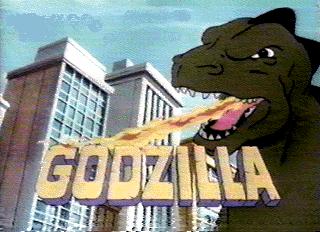
Classic Media will release the 1978 Hanna-Barbara Godzilla cartoon series in two DVD volumes on June 6. They will each retail for $12.98. This is the series that teamed Japan's favorite giant monster with a seafaring team of scientists and Godzilla's pesky flying nephew, Godzookie, who at least wasn't quite as annoying as Godzilla's son, Minya.
Thursday, March 16, 2006
Marvel in the Middle East
Teshkeel Comics has released the first Arabic version of a Marvel comic in the Middle East, Spectacular Spider-Man:
Still to come: Arabic translations of Fantastic Four, X-Men, The Incredible Hulk, and Ghost Rider.
I can't wait to see how that last one goes over.
'We are thrilled at the chance to bring the excitement and universal appeal of Marvels' superheroes to the Middle East. This is our first step in establishing a new direction in children's media that will fill the void and provide quality entertainment for the Arab audience,' says Dr. Al-Mutawa, founder and CEO of Teshkeel Media Group.
Spider-Man was chosen as Teshkeel's first release because of the character's international following based on the success of the comic book series and the Hollywood blockbuster films.
Still to come: Arabic translations of Fantastic Four, X-Men, The Incredible Hulk, and Ghost Rider.
I can't wait to see how that last one goes over.
That wall-crawling weirdo!
French "Spider-Man" Alain Robert, known for scaling skyscrapers without permission, is at it again, this time climbing a 31-floor office building outside Paris on Wednesday using only his bare hands. It was his last climb before spending a week in prison in Texas, where he pulled the same stunt in November.
Subscribe to:
Posts (Atom)