Superman isn't letting a little thing like a recession keep him from going up, up and away. But can the rest of us take advantage?
A copy of Action Comics No. 1 set a record last week when it sold for $1 million, the highest price any comic book has ever commanded, and a sizable sum even for the book that introduced Superman. But that record didn't stand long. Three days later, Batman proved he has what it takes to take down the Man of Steel. A copy of Detective Comics No. 27, the Caped Crusader's debut issue, sold at auction for $1,075,500.
Both comics are in excellent condition, each rating an 8.0 out of 10 according to the Certified Guarantee Company. But the sale prices were staggering nonetheless. Before this year, no comic book had come close to the $1 million threshold. The top sale price I could find was $350,000 for a copy of Marvel Comics No. 1 purchased in 2001.
So, is this the start of a bull market for old comic books? And, if so, does it reflect real value, or is it a bubble waiting to pop?
The last time comics entered a boom period was the late 1980s and early '90s. And that boom continued even through the recession of 1990-91.
That boom, however, turned out to be the perfect set-up for a disastrous crash. The official history of the period tells of speculators — mostly people who had never seriously read or collected comic books before — entering the market and driving up the prices of newly published books. That fueled the growth of upstart publishers looking to cash in on the increased demand.
My own pet theory is that many of those speculators thought comic books were a safe haven in an otherwise sluggish economy. But whatever their motives, the speculators thought wrong.
In 1993, while the rest of the economy was recovering, the comics bubble burst. During the next four years, many of the publishers that had helped fuel the boom — Broadway Comics, Tekno Comics, Eclipse and Valiant — went under. Retailers and many of their customers were left holding boxes filled with near worthless books, some of which had fetched hundreds of dollars during the boom's peak.
But if history is repeating itself, it's not following the same script. The '90s comics bubble was limited to newly published comics with large print runs. When demand dropped, there were simply too many comics in circulation for prices not to fall to near nothing. This time around, we're looking at two books published in the late 1930s, the beginning of comics' "Golden Age." Publishers can't flood the market with 70-year-old comics.
Another difference this time is comics have not run counter to the rest of the economy.
According to Nostomania.com, virtually all of the top 100 most valuable comics have lost value during the past year. Two of the few exceptions, Showcase No. 22 (first appearance of the second Green Lantern) and Tales of Suspense No. 39 (debut of Iron Man), can be explained by Hollywood hype. A Green Lantern movie is in the works, and the Iron Man sequel hits theaters this spring.
Ultimately, the record sale prices of Action Comics No. 1 and Detective Comics No. 27 could be meaningless anomalies. Or they could drive speculation that might extend to other vintage comics and end up crashing down in a few years. Or, just maybe, all of this is a real reflection of the enduring value of old comic books.
But for now, I wouldn't bet a copy of Amazing Fantasy No. 15 on any of those possibilities if I were you.
Thursday, March 04, 2010
Thursday, February 25, 2010
Culture Shock 02.25.10: 'That guy' is no longer a mystery man
![]() |
| It's that guy! |
You're watching television and see an actor you've seen a million times before. But you can't remember his name and aren't even sure where you saw him. You can't look it up online because you wouldn't know where to begin. Slowly, it starts to drive you insane, and you can't stand it anymore. You phone a friend.
"Hey, turn your TV to channel 38," you say. "No, I don't care that you're watching 'Lost.' You don't understand 'Lost,' anyway. Change the #%&@ channel! Got it? OK, help me out. See that guy, the one with the hat? No, the other one. It's that guy!"
Yes, that's the eternal refrain: "It's that guy!" But who is that guy?
For as long as there have been hard-working character actors taking jobs just to pay the bills, with no hope of ever planting their footprints in front of Grauman's Chinese Theater, people have said, "It's that guy!" He's somebody. You know his face for a reason. But his name escapes you. For all his years of acting, the guy might as well be a face on a milk cartoon.
Now, at long last, there's help. There's "That Guy!"
That Guy! is a Web site devoted to the nameless faces that keep you up at night.
Lucky for you, the friendly folks at Neatorama.com found That Guy! And Neatorama is one of the nearly 200 Web sites I scan every day to bring you vital information like this, allowing you to get some sleep instead of obsessing over actors who may have been dead for 10 or 20 years for all you know.
Online at www.460xvr.com/tg/not.htm, That Guy! lets you scroll through photos of character actors — much like looking through a book of mug shots at the police station — in search of that guy. And like any good collection of mug shots, it contains many of the usual suspects.
Looking for that guy who always plays either the grubby campfire cook in old westerns or the redneck moonshiner? You're probably thinking of Dub Taylor. Or what about the guy who played something like a dozen different characters over the course of "M*A*S*H" and was the go-to guy for Asian roles throughout the 1970s? Yeah, that's James Hong.
If you're like me, and the parts of your brain that could otherwise be curing cancer or picking winning horses at the track are instead filled with a century's worth of useless cultural trivia, you may think you don't need That Guy!
You'd be wrong.
Even trained professionals get stumped sometimes. For example, I used to get Peter Mark Richman confused with Robert Lansing. In the 1960s, Richman guest starred in "The Outer Limits" and "The Twilight Zone," two shows known for "that guy" casting. Lansing, meanwhile, starred in the second-season "Star Trek" episode "Assignment: Earth" and went on to a recurring role in the 1980s CBS crime drama "The Equalizer."
Then I became addicted to buying packs of "Outer Limits" and "Twilight Zone" trading cards, hoping with each pack to obtain one of the rare cards autographed by William Shatner — or at least Jack Klugman. Instead, I got Richman's autograph. Twice. And I ended up paying $50 to get Shatner's card from eBay. Believe me, I never got Richman and Lansing confused again.
That Guy! is a work in progress. For example, while it does include Richman, Lansing is missing. And any listing of character actors that doesn't include Earl Holliman ("Police Woman") is by definition not comprehensive.
But the next time you blank out on Henry Silva or Michael Ansara — they both played Kane on "Buck Rogers in the 25th Century," but only one of them was ever a Klingon — maybe That Guy! can help you out.
At the least, it could keep your next drunken argument about who played the lazy-eyed doctor in "The Cannonball Run" from turning violent. (Hint: It's Jack Elam. And I didn't have to look that up.)
Thursday, February 18, 2010
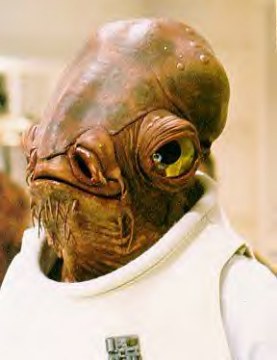
Culture Shock 02.18.10: Admiral Ackbar knows a trap when he sees it
As the saying goes, "There are no small parts, only small actors."
Yet I suspect Tim Rose never thought his "small part" more than 25 years ago would amount to much in 2010.
Back in 1983, Rose portrayed Admiral Ackbar, the squid-headed commander of the Rebel Alliance fleet in "Star Wars: Episode VI — Return of the Jedi."
As a character, Ackbar doesn't have a lot going for him. To be honest, he is a lousy battlefield commander, so it falls to Lando Calrissian (Billy Dee Williams) to hold the fleet together until it can finally launch its assault on the Death Star.
Ackbar does, however, have a keen grasp of the obvious. When the rebels arrive to find the Imperial fleet waiting in ambush and the Death Star's defense shield still up, Ackbar shouts, "It's a trap!"
And as strange as it may seem, that simple, three-word exclamation still echoes through American pop culture 27 years later.
Don't believe me? Search YouTube for "Ackbar" and you'll find more than 1,000 videos, most of them playing off that now-immortal phrase. The admiral may not know how his ships can repel firepower of the Death Star's magnitude, but he definitely knows a trap when he sees one.
My favorite of the videos I've seen is one titled "It's a Trap Volume 1," in which Ackbar repeatedly warns other movie characters — like Indiana Jones and Austin Powers — about various traps. But none of them listen.
Seriously, folks, if Admiral Ackbar tells you it's a trap, you better believe it's a trap.
Besides being a popular subject for amateur videos on YouTube, Ackbar has shown up in a Jerry Springer parody on CollegeHumor.com and, more than once, on Adult Swim's animated series "Robot Chicken."
But that's not surprising. The guys who produce "Robot Chicken" probably still have all of their original "Star Wars" action figures — some still in mint condition.
Then, last week, Ackbar made his most high-profile appearance yet.
After President Barack Obama invited Republican leaders to participate in a health-care summit, some Republicans and radio personalities like Rush Limbaugh branded the summit "a trap." So, when Jon Stewart played clips on "The Daily Show" of Limbaugh and company saying "It's a trap," guess who showed up at the end with his own "It's a trap."
Yes, it was Admiral Ackbar, breaking into the mainstream. Like Boba Fett before him, he has achieved a level of notoriety that defies all logic.
Actually, Ackbar's popularity may be easier to understand than Boba Fett's. All Boba Fett ever did was say five lines in "The Empire Strikes" back and get eaten alive by the Sarlacc in "Return of the Jedi."
But what about the actor who helped make all of this possible?
Apart from playing Ackbar, Rose is probably best known — to the extent he is known — for helping bring to life the title character of the 1986 George Lucas flop "Howard the Duck."
And the most interesting thing about that is Rose was just one of eight actors billed in the role. (Similarly, I'm just one of 8,000 writers to make that "billed" joke.)
He wasn't even the one who provided Howard's voice. According to the Internet Movie Database, that was a fellow by the name of Chip Zien, who went on to guest appearances in prime-time shows like "CSI" and "Ugly Betty."
But if there is any consolation, there aren't 1,000 "Chip Zien" videos on YouTube.
Yet I suspect Tim Rose never thought his "small part" more than 25 years ago would amount to much in 2010.
Back in 1983, Rose portrayed Admiral Ackbar, the squid-headed commander of the Rebel Alliance fleet in "Star Wars: Episode VI — Return of the Jedi."
As a character, Ackbar doesn't have a lot going for him. To be honest, he is a lousy battlefield commander, so it falls to Lando Calrissian (Billy Dee Williams) to hold the fleet together until it can finally launch its assault on the Death Star.
Ackbar does, however, have a keen grasp of the obvious. When the rebels arrive to find the Imperial fleet waiting in ambush and the Death Star's defense shield still up, Ackbar shouts, "It's a trap!"
And as strange as it may seem, that simple, three-word exclamation still echoes through American pop culture 27 years later.
Don't believe me? Search YouTube for "Ackbar" and you'll find more than 1,000 videos, most of them playing off that now-immortal phrase. The admiral may not know how his ships can repel firepower of the Death Star's magnitude, but he definitely knows a trap when he sees one.
My favorite of the videos I've seen is one titled "It's a Trap Volume 1," in which Ackbar repeatedly warns other movie characters — like Indiana Jones and Austin Powers — about various traps. But none of them listen.
Seriously, folks, if Admiral Ackbar tells you it's a trap, you better believe it's a trap.
Besides being a popular subject for amateur videos on YouTube, Ackbar has shown up in a Jerry Springer parody on CollegeHumor.com and, more than once, on Adult Swim's animated series "Robot Chicken."
But that's not surprising. The guys who produce "Robot Chicken" probably still have all of their original "Star Wars" action figures — some still in mint condition.
Then, last week, Ackbar made his most high-profile appearance yet.
After President Barack Obama invited Republican leaders to participate in a health-care summit, some Republicans and radio personalities like Rush Limbaugh branded the summit "a trap." So, when Jon Stewart played clips on "The Daily Show" of Limbaugh and company saying "It's a trap," guess who showed up at the end with his own "It's a trap."
Yes, it was Admiral Ackbar, breaking into the mainstream. Like Boba Fett before him, he has achieved a level of notoriety that defies all logic.
Actually, Ackbar's popularity may be easier to understand than Boba Fett's. All Boba Fett ever did was say five lines in "The Empire Strikes" back and get eaten alive by the Sarlacc in "Return of the Jedi."
But what about the actor who helped make all of this possible?
Apart from playing Ackbar, Rose is probably best known — to the extent he is known — for helping bring to life the title character of the 1986 George Lucas flop "Howard the Duck."
And the most interesting thing about that is Rose was just one of eight actors billed in the role. (Similarly, I'm just one of 8,000 writers to make that "billed" joke.)
He wasn't even the one who provided Howard's voice. According to the Internet Movie Database, that was a fellow by the name of Chip Zien, who went on to guest appearances in prime-time shows like "CSI" and "Ugly Betty."
But if there is any consolation, there aren't 1,000 "Chip Zien" videos on YouTube.
Thursday, February 11, 2010
Culture Shock 02.11.10: Aqua Net fog can't hide awful '80s cartoons
![]() |
| So many fools. So much pity. |
So, I was initially excited to learn Warner Bros. is producing a two-DVD set of "classic" '80s cartoons.
The studio will release "Saturday Morning Cartoons: The 1980s Vol. 1" on May 1, and while Warner Bros. hasn't announced the set's contents, the package art holds a few clues — which is why my excitement quickly turned into disappointment.
Apart from "Thundarr the Barbarian," which holds up surprisingly well, the DVDs will include "Monchichis," "The Flintstone Kids," "Dragon's Lair" and "Mr. T."
Ah, yes. Despite the Aqua Net haze of time, I remember it clearly: Saturday-morning cartoons during the '80s were, for the most part, awful. How did I forget?
The soft-focus lens of nostalgia obscures many of blemishes. By any reasonable standard, the cartoons I love from the '70s weren't particularly good, either. Still, they had something that most of the subsequent decade's Saturday-morning programs lacked. But whether that something was creativity or kitsch is probably a matter of taste.
Many of the most fondly remembered cartoons of the '80s — "Transformers," "Robotech," "Thundercats," "She-Ra," etc. — aired in weekday syndication. Saturday mornings, burdened by more stringent broadcast standards, were tame and lame in comparison.
There were three main types of Saturday-morning cartoons during the decade: cartoons based on real people or live-action TV characters, cartoons based on video games, and cartoons based on tiny, mythological creatures created by Belgians.
The A-Team's Mr. T., for example, told youngsters to stay in school and off drugs. Gary Coleman of "Diff'rent Strokes" fame lent his voice to a guardian angel who helped children in trouble. And Punky Brewster (aka Soleil Moon Frye) did pretty much the same stuff she did on her nighttime sitcom.
Nowadays, video games are incredibly sophisticated and inspire Hollywood movies. Back then, they were incredibly simple and inspired cartoons with plots that had nothing to do with the games because the games didn't have plots. Pac-Man, Q*bert, Frogger, Donkey Kong and Pitfall all inspired Saturday-morning adaptations, each more suspect than the last.
And then there were the Smurfs. Dreamed up by Belgian cartoonist Peyo, the Smurfs were a race of small blue men, each three apples tall. And by men, I mean they were all males, at least until Smurfette showed up, which begs lots of questions about Smurf procreation.
NBC had so much success with "The Smurfs" that it commissioned "The Snorks," created by yet another Belgian cartoonist. The Snorks were just like the Smurfs except they lived underwater and were less communist.
In retrospect, that's a pretty bleak television landscape, and one that never recovered, as the best cartoons moved to cable TV and Saturday mornings became, due in part to the Children's Television Act of 1990, a dumping ground for soulless "educational and informational" programming.
I might pick up "Saturday Morning Cartoons: The 1980s Vol. 1" just for "Thundarr," but if Warner Bros. releases a Vol. 2, I hate to think what it will contain. Saturday mornings only go downhill from here.
Thursday, February 04, 2010
Culture Shock 02.04.10: Surviving the '70s with the 'Star Trek' cast
The last of three drive-in movies William Shatner starred in during the 1970s has finally made its way to DVD.
"Kingdom of the Spiders" finds the former "Star Trek" captain trying to save a rural Arizona town from being overrun by angry arachnids.
After farmers eradicate the spiders' natural food supply, the spiders turn to the only food sources left to them — livestock and people. It then falls to veterinarian Robert "Rack" Hansen (Shatner) and entomologist Diane Ashley (Tiffany Bolling) to try to stop the ravenous tarantulas before they cocoon the entire town.
Nature-strikes-back movies were a staple of 1970s creature features, and "Kingdom of the Spiders" is one of the better examples. (It certainly has "Frogs" beat.) Still, "Kingdom" owes its cult status mostly to Shatner, who is in full Shatner mode throughout.
Shout! Factory's "special edition" DVD includes behind-the-scenes footage, an audio commentary and interviews. Now that he has two Emmys on his mantelpiece, Shatner is a good sport when it comes to talking about some of his lesser projects. He gamely reminisces about his experiences on the set, including filming the iconic scene in which he crawls up a staircase while covered in live tarantulas.
Apart from "Kingdom of the Spiders," Shatner also appeared in the cult favorites "The Devil's Rain" and "Big Bad Mama," both previously released on DVD. "The Devil's Rain" (1975) also features John Travolta in one of his earliest roles, while "Big Bad Mama" (1974) is infamous for its sex scene between Shatner and Angie Dickinson.
While I'm sure Shatner would have preferred better roles in the 1970s — not that there is anything wrong with a sex scene with Angie Dickinson — he fared pretty well compared to most of his "Star Trek" co-stars.
Only Leonard Nimoy did as well as Shatner. He starred in two seasons of "Mission: Impossible," taking over the "master of disguise" role from Martin Landau.
Between 1969, when the last episode of "Star Trek" aired, and 1979, when "Star Trek: The Motion Picture" revived the franchise, DeForest Kelley's best-known part was in one of those nature-strikes-back movies, 1972's "Night of the Lepus." But instead of spiders or even frogs, Kelley had to worry about man-eating bunny rabbits the size of Volkswagens.
Nichelle Nichols had a supporting role in the Isaac Hayes action film "Truck Turner" (1974), and Hayes' title song is better known than the movie. Walter Koenig, meanwhile, appeared in two episodes of the Canadian sci-fi series "The Starlost" (1973), which had special effects that make the original "Star Trek" look like "Avatar."
James Doohan appeared in Roger Vadim's 1971 film "Pretty Maids All in a Row," for which "Star Trek" creator Gene Roddenberry wrote the screenplay. Doohan then got a promotion of sorts, playing the commander on the CBS Saturday-morning sci-fi series "Jason of Star Command."
And lastly, George Takei starred in the 1972 hippie exploitation flick "Josie's Castle," which is available on DVD under the title "Teenage Divorcee," even though none of the characters are teens.
Looking back, it's a crime that the "Star Trek" cast had so much trouble landing decent roles during the '70s. But during those fallow years before "Star Trek" became a successful film franchise, the once and future crew of the Enterprise did give fans of B-movies and forgotten TV shows a lot of material for our late-night viewing pleasure.
"Kingdom of the Spiders" finds the former "Star Trek" captain trying to save a rural Arizona town from being overrun by angry arachnids.
After farmers eradicate the spiders' natural food supply, the spiders turn to the only food sources left to them — livestock and people. It then falls to veterinarian Robert "Rack" Hansen (Shatner) and entomologist Diane Ashley (Tiffany Bolling) to try to stop the ravenous tarantulas before they cocoon the entire town.
Nature-strikes-back movies were a staple of 1970s creature features, and "Kingdom of the Spiders" is one of the better examples. (It certainly has "Frogs" beat.) Still, "Kingdom" owes its cult status mostly to Shatner, who is in full Shatner mode throughout.
Shout! Factory's "special edition" DVD includes behind-the-scenes footage, an audio commentary and interviews. Now that he has two Emmys on his mantelpiece, Shatner is a good sport when it comes to talking about some of his lesser projects. He gamely reminisces about his experiences on the set, including filming the iconic scene in which he crawls up a staircase while covered in live tarantulas.
Apart from "Kingdom of the Spiders," Shatner also appeared in the cult favorites "The Devil's Rain" and "Big Bad Mama," both previously released on DVD. "The Devil's Rain" (1975) also features John Travolta in one of his earliest roles, while "Big Bad Mama" (1974) is infamous for its sex scene between Shatner and Angie Dickinson.
While I'm sure Shatner would have preferred better roles in the 1970s — not that there is anything wrong with a sex scene with Angie Dickinson — he fared pretty well compared to most of his "Star Trek" co-stars.
Only Leonard Nimoy did as well as Shatner. He starred in two seasons of "Mission: Impossible," taking over the "master of disguise" role from Martin Landau.
Between 1969, when the last episode of "Star Trek" aired, and 1979, when "Star Trek: The Motion Picture" revived the franchise, DeForest Kelley's best-known part was in one of those nature-strikes-back movies, 1972's "Night of the Lepus." But instead of spiders or even frogs, Kelley had to worry about man-eating bunny rabbits the size of Volkswagens.
Nichelle Nichols had a supporting role in the Isaac Hayes action film "Truck Turner" (1974), and Hayes' title song is better known than the movie. Walter Koenig, meanwhile, appeared in two episodes of the Canadian sci-fi series "The Starlost" (1973), which had special effects that make the original "Star Trek" look like "Avatar."
James Doohan appeared in Roger Vadim's 1971 film "Pretty Maids All in a Row," for which "Star Trek" creator Gene Roddenberry wrote the screenplay. Doohan then got a promotion of sorts, playing the commander on the CBS Saturday-morning sci-fi series "Jason of Star Command."
And lastly, George Takei starred in the 1972 hippie exploitation flick "Josie's Castle," which is available on DVD under the title "Teenage Divorcee," even though none of the characters are teens.
Looking back, it's a crime that the "Star Trek" cast had so much trouble landing decent roles during the '70s. But during those fallow years before "Star Trek" became a successful film franchise, the once and future crew of the Enterprise did give fans of B-movies and forgotten TV shows a lot of material for our late-night viewing pleasure.
Thursday, January 28, 2010
Culture Shock 01.28.10: Who wants to be a paranormal investigator?
![]() |
| Night vision is scary. |
It's all the rage. At least three cable channels currently air shows devoted to "paranormal investigations." And ghost hunting doesn't take any special skills. The hosts of Syfy's "Ghost Hunters" are plumbers, which I guess can be useful if your toilet is haunted. And who hasn't seen something scary in a toilet?
Airing since 2004, "Ghost Hunters" — the granddaddy of the current crop of paranormal TV shows — has spawned two spin-offs, "Ghost Hunters Academy," where aspiring paranormal investigators learn the tricks of the trade, and "Ghost Hunters International."
Again, these are not difficult skills to master. Mainly, it amounts to wandering around creepy, abandoned, decrepit buildings and attributing every creaking floorboard and drafty room to a ghostly presence.
It's so easy, college students can do it, which they do on A&E's "Paranormal State." The show follows members of the Paranormal Research Society at Penn State University as they try to bust ghosts and cast out evil spirits.
I've seen about a half dozen episodes of "Paranormal State," and two of those led the Paranormal Research Society to Alabama. Make of that what you will, but I blame Kathryn Tucker Windham, whose "13 Alabama Ghosts" books used to have half of my elementary-school classmates believing their houses were haunted.
Earlier this month, A&E launched a new series, "Paranormal Cops," about four Chicago police officers who arrest the living by day and confront the dead by night. I hope they're better at catching crooks than they are at catching ghosts.
Not to be left out, Travel Channel airs my favorite show of the bunch, "Ghost Adventures."
As a Travel Channel show, "Ghost Adventures" goes to the some of best locations — places that are downright creepy whether or not they're haunted. But apart from that, "Ghost Adventures" has the most entertaining cast of ghost busters.
Zak Bagans is the team's leader. With his spiked hair and tight, Ed Hardy-like T-shirts, he is a stereotypical alpha male. His main investigative technique is to yell at any ghosts who may be present and dare them to attack him.
If any ghosts have ever taken Zak up on that offer, I missed that episode, unfortunately.
Next is Nick Groff, Zak's second in command. Nick tries to copy Zak's alpha-male routine, but he's nowhere near as good at it. He'll always be just a wingman.
And then there's Aaron Goodwin, the team's equipment technician.
Alas, poor Aaron. He's the one the ghosts supposedly always pick on, to the point that Zak and Nick often use him as bait to lure ill-tempered spirits into showing themselves.
Again, if this trick has ever worked, I've not seen convincing proof of it.
I'm not a scientist, but I'm amazed at what counts for evidence during these so-called investigations.
Motes of dust filmed on night vision are "spectral orbs," and low-frequency ambient noises caught on tape are voices from beyond.
I don't blame the average person for not knowing that our brains are wired to detect patterns, sometimes even where no pattern exists. That's cutting-edge neuroscience. But you'd think expert paranormal investigators would be familiar with the concept. Then they'd be more skeptical about what they see and hear.
Or maybe critical thinking is a special skill.
Thursday, January 21, 2010
Culture Shock 01.21.10: 'Avatar' mania opens a window of opportunity
I must be the only person on Earth who hasn't seen "Avatar," and I blame the movie's fans.
When even people who like James Cameron's latest opus admit the story is Disney's "Pocahontas" meets "Thundercats," no 3-D special effects — no matter how "game changing" — are enough to lure me to the theater.
If I want to watch a 3-D movie, I have a DVD of "The Stewardesses" at home. Personally, I think topless stewardesses are a better use of 3-D technology than a planet populated by blue-skinned cat people. But maybe that's just me.
No matter how much money "Avatar" makes or how many awards it wins, it's hard to take a film seriously when half the Internet calls it "Dances with Smurfs."
Still, I'm trying to look on the bright side. With people saying "Avatar" will change the way Hollywood movies are made just like "Star Wars" did, we just might be in for a few years of movies that really are risky and experimental.
After "Star Wars" revolutionized filmmaking in 1977, every studio in Hollywood tried to replicate George Lucas' success. Studio executives threw money at almost every sci-fi project they saw. If you were an aspiring filmmaker with a pitch that involved spaceships or robots or lasers, it was your moment.
Just think: In the wake of "Star Wars," a major Hollywood studio was willing to let David Lynch — the king of weird movies — direct a film version of Frank Herbert's classic science-fiction novel "Dune." No one in his right mind would have done that without visions of Death Star-sized profits dancing in his head.
Disney financed the sci-fi thriller "The Black Hole" and Steven Lisberger's visually groundbreaking "Tron."
Then, in 1984, Universal Studios released "The Last Starfighter," the first film to use computer-generated imagery to create semi-realistic space battles. And that same year, "The Adventures of Buckaroo Banzai Across the 8th Dimension" — a movie I'm still amazed was ever greenlit — hit theaters across the nation.
There was just one small problem: Most of those movies were either box-office disappointments or outright bombs. And when it became obvious that nobody was going to make the next "Star Wars" trilogy, the money dried up, unless your name was James Cameron. Then you got to make "Aliens" and the "Terminator" movies.
But most of those also-rans eventually gained respectable cult followings. That's why Disney is working on a remake of "The Black Hole" and has its "Tron" sequel, "Tron Legacy," set to debut in IMAX 3-D late this year.
I don't know what hopes Disney's executives have for "The Black Hole," but I imagine they're praying "Tron Legacy" is the next "Avatar" — minus the Thundersmurfs.
This will probably be a narrow window of opportunity. Right now, everyone wants to unleash the next "Avatar," complete with all of the fancy and expensive 3-D effects. Studios will gamble hundreds of millions of dollars to do it. But when the next "Avatar" fails to materialize, the money will disappear again.
So, who wants to hear the pitch for my groundbreaking 3-D movie, "Kung-Fu Biker Zombies vs. the Vampire Strippers from Hell in 3-D"?
I figure I've got all of Hollywood's latest fads covered.
When even people who like James Cameron's latest opus admit the story is Disney's "Pocahontas" meets "Thundercats," no 3-D special effects — no matter how "game changing" — are enough to lure me to the theater.
If I want to watch a 3-D movie, I have a DVD of "The Stewardesses" at home. Personally, I think topless stewardesses are a better use of 3-D technology than a planet populated by blue-skinned cat people. But maybe that's just me.
No matter how much money "Avatar" makes or how many awards it wins, it's hard to take a film seriously when half the Internet calls it "Dances with Smurfs."
Still, I'm trying to look on the bright side. With people saying "Avatar" will change the way Hollywood movies are made just like "Star Wars" did, we just might be in for a few years of movies that really are risky and experimental.
After "Star Wars" revolutionized filmmaking in 1977, every studio in Hollywood tried to replicate George Lucas' success. Studio executives threw money at almost every sci-fi project they saw. If you were an aspiring filmmaker with a pitch that involved spaceships or robots or lasers, it was your moment.
Just think: In the wake of "Star Wars," a major Hollywood studio was willing to let David Lynch — the king of weird movies — direct a film version of Frank Herbert's classic science-fiction novel "Dune." No one in his right mind would have done that without visions of Death Star-sized profits dancing in his head.
Disney financed the sci-fi thriller "The Black Hole" and Steven Lisberger's visually groundbreaking "Tron."
Then, in 1984, Universal Studios released "The Last Starfighter," the first film to use computer-generated imagery to create semi-realistic space battles. And that same year, "The Adventures of Buckaroo Banzai Across the 8th Dimension" — a movie I'm still amazed was ever greenlit — hit theaters across the nation.
There was just one small problem: Most of those movies were either box-office disappointments or outright bombs. And when it became obvious that nobody was going to make the next "Star Wars" trilogy, the money dried up, unless your name was James Cameron. Then you got to make "Aliens" and the "Terminator" movies.
But most of those also-rans eventually gained respectable cult followings. That's why Disney is working on a remake of "The Black Hole" and has its "Tron" sequel, "Tron Legacy," set to debut in IMAX 3-D late this year.
I don't know what hopes Disney's executives have for "The Black Hole," but I imagine they're praying "Tron Legacy" is the next "Avatar" — minus the Thundersmurfs.
This will probably be a narrow window of opportunity. Right now, everyone wants to unleash the next "Avatar," complete with all of the fancy and expensive 3-D effects. Studios will gamble hundreds of millions of dollars to do it. But when the next "Avatar" fails to materialize, the money will disappear again.
So, who wants to hear the pitch for my groundbreaking 3-D movie, "Kung-Fu Biker Zombies vs. the Vampire Strippers from Hell in 3-D"?
I figure I've got all of Hollywood's latest fads covered.
Thursday, January 14, 2010
Culture Shock 01.14.10: 'Spider-Man 4' gets boot in favor of reboot
If anyone ever wanted to deliberately sabotage a successful movie franchise, they probably could do worse than take notes on Sony Pictures' handling of the Spider-Man films.
On Monday, Sony announced it is shelving "Spider-Man 4," ending a series that has grossed more than $1 billion in the U.S. and Canada alone. In its place, Sony will start over with a new Spider-Man movie that takes the web-headed, wall-crawling superhero back to high school.
Sony is going forward without "Spider-Man" director Sam Raimi and star Tobey Maguire, which is no surprise. Raimi spent most of the past year apologizing for "Spider-Man 3," which critics and fans alike had greeted with widespread disappointment.
Raimi had promised "Spider-Man 4" would have a better script that would emphasize the characters and not try to shoehorn too many supervillains into the mix. Unfortunately, the script Sony had in hand didn't meet Raimi's expectations. The word from Deadline Hollywood's Nikki Finke and Mike Fleming was that Raimi "hated it."
So, he walked away for that most Hollywood of reasons — "creative differences" — and Sony is rebooting with a new director and a new cast.
All of that must have come as a surprise to John Malkovich, who, as recently as earlier in the day Monday, was reportedly set to play The Vulture in "Spider-Man 4."
Meanwhile, early rumors about Sony's revised plan aren't encouraging. I've already seen the words "dark" and "gritty" floating around, and Spider-Man doesn't really do dark and gritty. He's not Batman.
Still, while it looks like Sony has made a huge blunder, I can see why the studio's executives are looking to start again. Every successful superhero franchise since the 1980s has started to fall apart with its third installment. Remember "Superman 3," the sequel that tried to make us believe Richard Pryor could fly? 'Nuff said.
Other third-movie clunkers include "Batman Forever" and "X-Men: The Last Stand."
Given that track record, it's probably just as well that Christopher Nolan isn't in any hurry to follow up "Batman Begins" and "The Dark Knight."
Maybe the suits at Sony thought they were pressing their luck by going forward with a fourth Raimi-helmed Spider-Man movie, especially since "Spider-Man 3" had followed the trend of starting the franchise on a downward spiral.
But reboots are risky business, too. Nolan's Batman revival was a huge success, effectively fumigating the stench left behind by "Batman Forever" and "Batman and Robin." But Marvel Entertainment's 2008 revamp of the Hulk didn't fare much better at the box office than Ang Lee's 2003 film. Adjusted for inflation, it was pretty much a wash.
And after two modestly successful Fantastic Four movies, the most recent of which came out in 2007, Fox is already looking to reboot the series and bypass the third-movie letdown entirely. That's just fine for those of us who thought the Fantastic Four movies were lousy, anyway.
As for Spider-Man, it just gets worse. On Tuesday, news broke that the troubled Spider-Man musical is back on track for a Broadway run, thanks to backing by Marvel's new owner, Disney. Directed by Julie Taymor, for whom nothing is too over-the-top, and with music by the most pretentious duo on the planet, Bono and The Edge, it's sure to make "Spider-Man 3" look good.
I certainly know my disaster sense is tingling.
On Monday, Sony announced it is shelving "Spider-Man 4," ending a series that has grossed more than $1 billion in the U.S. and Canada alone. In its place, Sony will start over with a new Spider-Man movie that takes the web-headed, wall-crawling superhero back to high school.
Sony is going forward without "Spider-Man" director Sam Raimi and star Tobey Maguire, which is no surprise. Raimi spent most of the past year apologizing for "Spider-Man 3," which critics and fans alike had greeted with widespread disappointment.
Raimi had promised "Spider-Man 4" would have a better script that would emphasize the characters and not try to shoehorn too many supervillains into the mix. Unfortunately, the script Sony had in hand didn't meet Raimi's expectations. The word from Deadline Hollywood's Nikki Finke and Mike Fleming was that Raimi "hated it."
So, he walked away for that most Hollywood of reasons — "creative differences" — and Sony is rebooting with a new director and a new cast.
All of that must have come as a surprise to John Malkovich, who, as recently as earlier in the day Monday, was reportedly set to play The Vulture in "Spider-Man 4."
Meanwhile, early rumors about Sony's revised plan aren't encouraging. I've already seen the words "dark" and "gritty" floating around, and Spider-Man doesn't really do dark and gritty. He's not Batman.
Still, while it looks like Sony has made a huge blunder, I can see why the studio's executives are looking to start again. Every successful superhero franchise since the 1980s has started to fall apart with its third installment. Remember "Superman 3," the sequel that tried to make us believe Richard Pryor could fly? 'Nuff said.
Other third-movie clunkers include "Batman Forever" and "X-Men: The Last Stand."
Given that track record, it's probably just as well that Christopher Nolan isn't in any hurry to follow up "Batman Begins" and "The Dark Knight."
Maybe the suits at Sony thought they were pressing their luck by going forward with a fourth Raimi-helmed Spider-Man movie, especially since "Spider-Man 3" had followed the trend of starting the franchise on a downward spiral.
But reboots are risky business, too. Nolan's Batman revival was a huge success, effectively fumigating the stench left behind by "Batman Forever" and "Batman and Robin." But Marvel Entertainment's 2008 revamp of the Hulk didn't fare much better at the box office than Ang Lee's 2003 film. Adjusted for inflation, it was pretty much a wash.
And after two modestly successful Fantastic Four movies, the most recent of which came out in 2007, Fox is already looking to reboot the series and bypass the third-movie letdown entirely. That's just fine for those of us who thought the Fantastic Four movies were lousy, anyway.
As for Spider-Man, it just gets worse. On Tuesday, news broke that the troubled Spider-Man musical is back on track for a Broadway run, thanks to backing by Marvel's new owner, Disney. Directed by Julie Taymor, for whom nothing is too over-the-top, and with music by the most pretentious duo on the planet, Bono and The Edge, it's sure to make "Spider-Man 3" look good.
I certainly know my disaster sense is tingling.
Thursday, January 07, 2010
Culture Shock 01.07.10: Say goodbye and good riddance to awful Aughts
Everyone seems happy to be done with the Aughts. But are the Aughts really, as some claim, the worst decade ever?
They certainly have the worst name. "Aught" means "zero," which should have been an early warning that the Aughts were trouble.
Still, despite 9/11, the war in Iraq and the late-decade economic collapse, the Zero Decade doesn't have anything on the 1930s and '40s, which gave us World War II, the Great Depression and the Holocaust.
The 1960s were pretty bad, too. We had riots, presidential assassinations, the Vietnam War and, worst of all, hippies — dirty, stinking hippies.
Yet when I consider just the four decades I've experienced personally, the past 10 years are definitely a contender for the worst of the lot.
In retrospect, the 1980s and '90s seem pretty boring. But the momentous events that did occur during those 20 years were, for the most part, all for the best. At the top of the list, communism collapsed, freeing millions of people from tyranny and forcing alleged stand-up comedian Yakov Smirnoff into exile in Branson, Mo.
Those were good times.
But how do the Aughts stack up against the most maligned decade of my lifetime — the 1970s?
In most respects, even the '70s look good in comparison. And that's taking into account stagflation, long gasoline lines, the Iran hostage crisis and Watergate.
And just when you thought nothing could surpass the awfulness of '70s fashions, the Aughts stepped up to the challenge. The '70s gave us leisure suits, but the Aughts gave us Crocs. And while we may have worn bell-bottoms in the '70s, at least we didn't wear them low enough to show off our boxers. (Hardly anyone wore boxers back then, anyway. It was briefs or nothing.) Also, we all knew back then how to wear a baseball cap. (Hint: the brim faces forward.)
So, no matter how badly people dressed in the '70s, at least nobody dressed like the cast of "Jersey Shore."
The '70s also used to be the target of bipartisan contempt. Republicans hated them because they're when 1960s values went mainstream. Democrats hated them because they're when 1960s values "sold out" to the Establishment.
But I prefer to think of the '70s as the last decade before sex could kill you. Love was in the air, but AIDS wasn't. Not yet. It was a simpler, sexier time when Playboy Playmates didn't all have breast implants and you could still smoke indoors. We didn't realize how good we had it.
Comparing the '70s to the Aughts, the '70s come out on top just about every time. Just compare the music: Southern rock beats "new country," rhythm and blues beats hip-hop, and disco beats techno. These are facts.
As for movies, the '70s compare favorably to every decade, not just the Aughts. Name three movies from any other era, and I'll raise you a "Godfather," a "Jaws" and a "Star Wars."
The one thing the Aughts have in their favor is television. TV during the past 10 years was better than ever before — and that's true even after you deduct points for the glut of mindless "reality" shows. During the Aughts, all of the cable channels that popped up during the '80s and '90s started to pay off, from "The Wire" and "Battlestar Galactica" to "Dexter" and "The Shield."
Technology also plays in the Aughts' favor. When the decade began, I was using a huge desktop computer with a dial-up modem. Now I carry around a broadband connection in my pocket.
But, overall, the Aughts sucked. There's no getting around it.
So, to the Aughts I say, "Goodbye and good riddance."
Bring on the Teens.
They certainly have the worst name. "Aught" means "zero," which should have been an early warning that the Aughts were trouble.
Still, despite 9/11, the war in Iraq and the late-decade economic collapse, the Zero Decade doesn't have anything on the 1930s and '40s, which gave us World War II, the Great Depression and the Holocaust.
The 1960s were pretty bad, too. We had riots, presidential assassinations, the Vietnam War and, worst of all, hippies — dirty, stinking hippies.
Yet when I consider just the four decades I've experienced personally, the past 10 years are definitely a contender for the worst of the lot.
In retrospect, the 1980s and '90s seem pretty boring. But the momentous events that did occur during those 20 years were, for the most part, all for the best. At the top of the list, communism collapsed, freeing millions of people from tyranny and forcing alleged stand-up comedian Yakov Smirnoff into exile in Branson, Mo.
Those were good times.
But how do the Aughts stack up against the most maligned decade of my lifetime — the 1970s?
In most respects, even the '70s look good in comparison. And that's taking into account stagflation, long gasoline lines, the Iran hostage crisis and Watergate.
And just when you thought nothing could surpass the awfulness of '70s fashions, the Aughts stepped up to the challenge. The '70s gave us leisure suits, but the Aughts gave us Crocs. And while we may have worn bell-bottoms in the '70s, at least we didn't wear them low enough to show off our boxers. (Hardly anyone wore boxers back then, anyway. It was briefs or nothing.) Also, we all knew back then how to wear a baseball cap. (Hint: the brim faces forward.)
So, no matter how badly people dressed in the '70s, at least nobody dressed like the cast of "Jersey Shore."
The '70s also used to be the target of bipartisan contempt. Republicans hated them because they're when 1960s values went mainstream. Democrats hated them because they're when 1960s values "sold out" to the Establishment.
But I prefer to think of the '70s as the last decade before sex could kill you. Love was in the air, but AIDS wasn't. Not yet. It was a simpler, sexier time when Playboy Playmates didn't all have breast implants and you could still smoke indoors. We didn't realize how good we had it.
Comparing the '70s to the Aughts, the '70s come out on top just about every time. Just compare the music: Southern rock beats "new country," rhythm and blues beats hip-hop, and disco beats techno. These are facts.
As for movies, the '70s compare favorably to every decade, not just the Aughts. Name three movies from any other era, and I'll raise you a "Godfather," a "Jaws" and a "Star Wars."
The one thing the Aughts have in their favor is television. TV during the past 10 years was better than ever before — and that's true even after you deduct points for the glut of mindless "reality" shows. During the Aughts, all of the cable channels that popped up during the '80s and '90s started to pay off, from "The Wire" and "Battlestar Galactica" to "Dexter" and "The Shield."
Technology also plays in the Aughts' favor. When the decade began, I was using a huge desktop computer with a dial-up modem. Now I carry around a broadband connection in my pocket.
But, overall, the Aughts sucked. There's no getting around it.
So, to the Aughts I say, "Goodbye and good riddance."
Bring on the Teens.
Subscribe to:
Posts (Atom)