Showing posts with label classic cartoons. Show all posts

Thursday, April 12, 2012

Culture Shock: 04.12.12: '80s cartoons strike back — again!

Netflix has a section of children's programming it brands "Just for Kids," but pretty soon, I bet, a lot of 30-somethings will be clicking entry to relive part of their bygone youth.

Come to Cobra. We have cookies.

Last week, the video-streaming and DVD-rental service announced a deal with Hasbro to bring new and vintage cartoons based on Hasbro's toy franchises to Netflix's library of "watch instantly" offerings.

At the heart of the deal are Hasbro's latest cartoons, some of which are already available on Netflix instant: "Transformers Prime," "G.I. Joe: Renegades" and new versions of "Pound Puppies" and "My Little Pony." New seasons will appear on Netflix after they air on Hasbro's cable channel, The Hub.

I bet all of those college-age fans of "My Little Pony" — known as "Bronies," or so I've heard — are planning celebratory keggers even now. (Who am I to judge? When I was in college, I watched Nickelodeon's Canadian-import soap opera "Fifteen" every week — despite the shame that comes with watching any Canadian TV show that isn't "Kids in the Hall.")

But for those of us who watched weekday-afternoon cartoons during the 1980s, the big news was that the Netflix/Hasbro pact also included the original "Transformers" (before Michael Bay got his grubby hands on it), "G.I. Joe: A Real American Hero" (before Stephen Sommers did the same) and "Jem and the Holograms" (which no one has yet turned into a terrible live-action movie).

All three '80s classics will join Netflix's lineup later this year.

These shows are the forbidden fruit of children's programming. All were very popular in their day and built followings that even now still support comic books, T-shirts, DVD collections and retro-'80s-style toys. And all were derided when they originally aired as "half-hour toy commercials" because they were all based on Hasbro's popular toy brands.

Those of us who actually rushed home after school each day to watch "Transformers" or "Jem" didn't care one way or the other about commercialism. We just wanted to watch what were, at the time, the best cartoons around. (This was before "Batman: The Animated Series" upped the ante for action/adventure cartoons.)

Unfortunately, an unholy coalition of professional worriers, seeking to shield children from the twin bogeymen of commercialism and fantasy violence, agitated until Congress passed the Children's Television Act of 1990, which put restrictions on advertising during children's programming and mandated that broadcasters air more "educational" shows. The bottom line is the Children's Television Act made cartoons like "Transformers" and "G.I. Joe" less economically competitive in the brutally competitive world of TV syndication.

And that's partly why afternoon television is now wall-to-wall TV psychologists, TV doctors and TV judges — who just happen to be exactly the sort of professional scolds who demanded the federal government take action against cartoon commercialism in the first place.

If I didn't know better, I'd suspect that was the plan all along.

But revenge, as the Klingons say, is a dish best served cold. Today, Hasbro has its own cable channel, which is exempt from the rules that plague over-the-air broadcasters. So, Hasbro can produce new "My Little Pony" cartoons and sell My Little Pony ponies to the Bronies, and there's not much the killjoys at the Campaign for a Commercial-Free Childhood can do except mutter to themselves as they hand wash their Chairman Mao T-shirts — brand loyalty for commies.

And for those of us who refuse to pay another $50 a month to upgrade to the channel tier that includes The Hub, there's now Netflix, where the childhood Congress stole from us lives again.

Yo, Joe.


Thursday, October 20, 2011

Culture Shock: 10.20.11: Whatever happened to the Halloween television special?

Like a lot of things from the days when there were only three TV networks and cable TV was mostly reruns and wrestling, the prime-time Halloween special is largely a thing of the past.

"It's the Great Pumpkin, Charlie Brown," a holiday staple since it first aired in 1966, is pretty much the sole survivor from that bygone era.

It aired annually on CBS before switching to ABC a decade ago, a transition that came as a shock to those of us who grew up accustomed to seeing the swirling "CBS Special Presentation" logo — accompanied by a slightly alarming drum-and-brass fanfare — introducing each year's broadcast.


Halloween-themed episodes of regular prime-time shows don't count.

Besides, it's a little difficult to think of the "Treehouse of Horror" episodes of "The Simpsons," which have aired since 1990, as proper Halloween specials ever since Fox got the rights to the World Series and began delaying them until early November.

That's like watching a Christmas special in January. By then, you're over it.

The 1970s and '80s were a fertile period of Halloween programming.

"The Fat Albert Halloween Special" began its run in 1977.

What you need to understand about "Fat Albert," which was based on Bill Cosby's stand-up comedy routine, is that back then, childhood obesity was hilarious. Really, there was nothing better, especially if you tacked on a heartwarming life lesson.

The heartwarming life lesson at the end of "The Fat Albert Halloween Special" is that old people are, indeed, people, too.

More instructive in retrospect is the special's accurate depiction of trick-or-treating, which didn't yet involve parents hovering over you as you and your friends ventured from house to house wearing costumes unmarked by gaudy, reflective safety tape.

It's a wonder I survived the '70s, what with all of the horribly dangerous behavior I engaged in. We called it childhood.

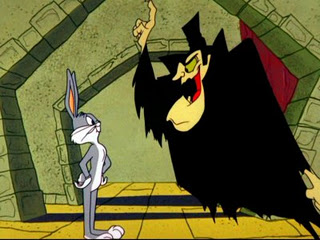
A year later came "Bugs Bunny's Howl-oween Special," a glorified clip show comprised of classic "Looney Tunes" shorts linked by new and distractingly inferior footage. But who cared if the new animation was lousy and Mel Blanc's voice had changed so much in the intervening decades that Bugs didn't always sound quite right? It was Bugs Bunny and Daffy Duck in prime time, and that's all any kid needed to know.

But not every Halloween special was animated, and not all were instant classics.

In 1976, ABC gave Paul Lynde, best known as the center square on "The Hollywood Squares" and Uncle Arthur on "Bewitched," his own special.

It's on DVD now, but it aired only once, and with good reason. It was terrible. When I watched it recently, it was against my doctor's orders — he told me to avoid ham.

Yet "The Paul Lynde Halloween Special" does have a secure place in television history because it featured an early TV performance by Kiss and established that the Wicked Witch of the West from "The Wizard of Oz" (Margaret Hamilton) and Witchiepoo from "H.R. Pufnstuf" (Billie Hayes) are sisters.

It is also the only known instance of Tim Conway not being funny.

By the end of the show, most of Kiss look like they're going to have a long, serious discussion with their agent. They wouldn't do anything this embarrassing again until their sans makeup period.

The last gasp for Halloween specials was "Garfield's Halloween Adventure" in 1985, which had the advantage of being entertaining and airing before most people started to hate Garfield the way Garfield hates Mondays.

At least I assume Garfield still hates Mondays, because it's not as if that joke ever gets old.

You know, come to think of it, maybe there's a reason they don't make Halloween specials anymore.

Saturday, July 02, 2011

Saturday nostalgia

This video may be from one independent UHF station in Chicago, but it reflects pretty much the universal TV-watching experience for anyone who grew up in the U.S. is the 1980s. (Note also the recycled 1960s cartoons on Sunday mornings.)

Thursday, October 07, 2010

Culture Shock 10.07.10: 'Thundarr the Barbarian' survives apocalypse

If you grew up watching Saturday-morning cartoons during the 1980s, chances are you're familiar with Ruby-Spears Productions, even if you don't recall the name.

Ruby-Spears produced some of that decade's most memorable cartoons, and one of them has finally made its long-overdue debut on home video.

Warner Bros., which owns most of the Ruby-Spears library, has just released "Thundarr the Barbarian" on DVD-R through its Warner Archive label, online at www.wbshop.com. The Warner Archive is a burn-on-demand service, so the DVDs aren't manufactured until you order them, and they're not available in stores.

But don't let the hassle of ordering direct from Warner Bros. deter you. "Thundarr" holds up surprisingly well for a 30-year-old cartoon constrained by the draconian standards-and-practices rules of early-'80s Saturday-morning broadcast television. If you now have children of your own, "Thundarr" is something you can enjoy together. It goes best with a bowl of Sugar Pops, or Corn Pops, or whatever Kellogg's is calling them now.

"Thundarr" is Conan the Barbarian meets He-Man, even though the show actually pre-dates "He-Man and the Masters of the Universe" by a couple of years.

Two thousand years in the future, the Earth is a post-apocalyptic wasteland, littered with the ruins of the 20th century civilization. (The apocalypse in question is said to have occurred in 1994, when a "runaway planet" passed between the Earth and the moon with catastrophic results. So we really dodged a bullet.) But a new civilization has emerged, populated with human survivors, mutants, aliens and the occasional power-mad wizard who mixes science with sorcery.

The wizards are the ones who menace Thundarr and his friends during most of their weekly adventures.

"Thundarr" clearly owes a debt to the original "Star Wars" saga, which was in full swing when the show debuted in 1980. Thundarr's weapon of choice is his "sun sword," which works a lot like a lightsaber, except, this being a children's show, he never cuts anyone's arm off. Thundarr's best friend is Ookla the Mok, who is a bit like a Wookie, except with a lion's head. Like Chewbacca, Ookla speaks only in grunts and snarls.

Joining Thundarr and Ookla in their adventures is Princess Ariel, the one magic-user who uses her powers for good rather than evil.

The main reason "Thundarr the Barbarian" still entertains while most other cartoons of its era don't is the team of writers and animators behind it.

"Thundarr" was created by Steve Gerber, creator of Marvel Comics' Howard the Duck, which is not to be confused with the turkey of a movie that came later. One of the staff writers was Mark Evanier, writer of the comic "Groo the Wanderer" and a veteran of well-regarded cartoons like "Dungeons & Dragons" and "Garfield and Friends." The production design was the work of comics legend Jack Kirby, who co-created the Fantastic Four, the Hulk and other Marvel characters. And the character design came from Alex Toth, who also designed the characters for "Space Ghost" and "Superfriends."

Although it ran for only 21 episodes over two seasons, "Thundarr" has cemented its place among Saturday morning's most enduring TV shows and developed an enthusiastic cult following.

Most other Ruby-Spears shows, however, are products of their time.

The studio almost cornered the market for cartoons based on arcade games ("Dragon's Lair," "Space Ace" and "Donkey Kong"), produced animated versions of "Punky Brewster" and "Mork and Mindy," and even made cartoons based on the "Rambo" and "Police Academy" movies, as well as an animated Chuck Norris miniseries.

None of these shows hold up as well as "Thundarr." OK, most of them just don't hold up. But they're a window to the '80s.

Maybe, like "Thundarr," they'll resurface, too.


Thursday, February 11, 2010

Culture Shock 02.11.10: Aqua Net fog can't hide awful '80s cartoons

So many fools. So much pity.
When it comes to nostalgia, I consider myself a child of the 1970s, but the '80s are finally making a play for my affections.

So, I was initially excited to learn Warner Bros. is producing a two-DVD set of "classic" '80s cartoons.

The studio will release "Saturday Morning Cartoons: The 1980s Vol. 1" on May 1, and while Warner Bros. hasn't announced the set's contents, the package art holds a few clues — which is why my excitement quickly turned into disappointment.

Apart from "Thundarr the Barbarian," which holds up surprisingly well, the DVDs will include "Monchichis," "The Flintstone Kids," "Dragon's Lair" and "Mr. T."

Ah, yes. Despite the Aqua Net haze of time, I remember it clearly: Saturday-morning cartoons during the '80s were, for the most part, awful. How did I forget?

The soft-focus lens of nostalgia obscures many of blemishes. By any reasonable standard, the cartoons I love from the '70s weren't particularly good, either. Still, they had something that most of the subsequent decade's Saturday-morning programs lacked. But whether that something was creativity or kitsch is probably a matter of taste.

Many of the most fondly remembered cartoons of the '80s — "Transformers," "Robotech," "Thundercats," "She-Ra," etc. — aired in weekday syndication. Saturday mornings, burdened by more stringent broadcast standards, were tame and lame in comparison.

There were three main types of Saturday-morning cartoons during the decade: cartoons based on real people or live-action TV characters, cartoons based on video games, and cartoons based on tiny, mythological creatures created by Belgians.

The A-Team's Mr. T., for example, told youngsters to stay in school and off drugs. Gary Coleman of "Diff'rent Strokes" fame lent his voice to a guardian angel who helped children in trouble. And Punky Brewster (aka Soleil Moon Frye) did pretty much the same stuff she did on her nighttime sitcom.

Nowadays, video games are incredibly sophisticated and inspire Hollywood movies. Back then, they were incredibly simple and inspired cartoons with plots that had nothing to do with the games because the games didn't have plots. Pac-Man, Q*bert, Frogger, Donkey Kong and Pitfall all inspired Saturday-morning adaptations, each more suspect than the last.

And then there were the Smurfs. Dreamed up by Belgian cartoonist Peyo, the Smurfs were a race of small blue men, each three apples tall. And by men, I mean they were all males, at least until Smurfette showed up, which begs lots of questions about Smurf procreation.

NBC had so much success with "The Smurfs" that it commissioned "The Snorks," created by yet another Belgian cartoonist. The Snorks were just like the Smurfs except they lived underwater and were less communist.

In retrospect, that's a pretty bleak television landscape, and one that never recovered, as the best cartoons moved to cable TV and Saturday mornings became, due in part to the Children's Television Act of 1990, a dumping ground for soulless "educational and informational" programming.

I might pick up "Saturday Morning Cartoons: The 1980s Vol. 1" just for "Thundarr," but if Warner Bros. releases a Vol. 2, I hate to think what it will contain. Saturday mornings only go downhill from here.